Showing posts with label excuse. Show all posts

Friday, June 13, 2014

Connecting the Dots

I changed jobs almost a year ago; after 19 years of working as an occupational therapist in a large school district, I moved over to the world of academia, joining the faculty at a university in the heart of the city in which I live.

I continue to provide OT services for patients, but now part of my job also includes helping to shape the education – and the perspectives – of future occupational therapists.  I weave into what I teach many of the things I learned as a result of what my dad, my family, and I experienced after his diagnosis of brain cancer.  I feel compelled to impress certain things on the group of fledgling healthcare professionals before they enter the clinical arena, in hope of maximizing the positive impact they will have on their future patients and the families of their patients.  In the medical world, these tips are sometimes referred to as “clinical pearls.” 

I think there are a lot of lessons for the OT students to carry forward into their interactions with patients from things I saw (or didn’t see) when I was with my dad while he was in rehab.  On one such occasion, the occupational therapist came to my dad’s room and escorted us to the rehab gym, where she set him up at a big table.  She brought over a bowl of many small items which she dumped onto the surface in front of him, and she instructed him to use his left hand to sort the items into piles according to their similarities.  Before Dad could get started, she turned around and walked over to another patient on the other side of the gym, presumably to check in on that patient while Dad got going on the assignment he had gotten from her.


It was odd for me to be there in that setting as a caregiver instead of a service provider; I tried to make a conscious effort to let the therapist take the lead and not to prompt my dad too much during the intervention.  I watched him as he sat in the wheelchair that the OT had positioned at the table.  He looked at the stuff on the table for a minute, glanced around the room for a couple of minutes, and then looked at me.  “I guess she wants me to clean out her junk drawer,” he said to me in a stage whisper.  “If it was up to me, I would just throw all that crap away, but I guess if I do help her she will do something to help me get better so I can go home.”

Of course, I knew that what she wanted him to do was for his benefit, not to help her organize her junk drawer, but what I also knew was that Dad hated junk and that he hated to do things that he saw as a waste of time.  The OT had not explained to him why he was supported to perform the task.  I tried to explain it to him, but he was way past the point of listening at that point; he just wanted to get done with what he saw as the worthless job she had given him so he could get the hell out of there.

After about five minutes, the OT turned around and saw that Dad hadn’t started on the activity.  She came back over to us, and I waited to see what would be communicated between the two of them.  “Bill,” she said, annoying me with her assumed familiarity, “What did I tell you to do?”  And then I was annoyed with her tone and her attitude.  Dad, in maybe the first time in my life that I’d ever seen him do such a thing, offered an excuse to get out of doing the work: “I have to go to the bathroom, and I have a headache,” he told her. 

She seemed all-too-eager to take the bait.  “Oh, no problem,” she told him.  “We can go back to your room so you can use the restroom in there and then you can take a break.”

“Take a break from what – sitting on the sidelines with a task he sees as a complete waste of time while you chat it up with another patient??” I wanted to yell at her.  I knew what Dad was doing, but I also knew from past experience since he’d been sick that if I started raising a stink it would either embarrass him or scare him or both. 

I tell this story to the OT students now because I want them to see the big picture in the interventions they provide for their patients.  “Always connect the dots for the patient and for their caregivers,” I tell them.  “Don’t leave them to wonder why you are asking them to do something.  Talk to them about what their priorities are; explain the purpose of the activity and clearly identify what the patient will gain by putting forth effort in the session. Find out what their carrot is - what motivates and interests them - and incorporate that into your treatment plan.” 


There are several more clinical pearls that can be taken from this story, too, lessons that I think are important for healthcare professionals to know.  Through telling stories about people with injuries or illness like my dad, I hope to cultivate the compassion these students have so that they are able to connect the dots to effectively serve the needs of their patients for many years to come.

Tuesday, January 29, 2013

Measuring the Course


As far back as I can remember, one of my dad's routines after he got home from a long run was to immediately jump into the car to drive the route he had run to measure the exact distance of the course.  (This was WAY before GPS systems existed.) Most people would probably choose to sit down to rest as soon as they could after a strenuous workout, but Dad was the kind of person who couldn't stand to let grass grow under his feet.  He taught us to have honor and priorities, to set goals, to set our mind to doing things and then to follow through. WAY before Nike said it, he used to say “Just Do It” whenever he heard someone make an excuse for not doing something they should have been doing; I remember so many tough runs when he would tell me to tuck in behind him so that he could block the wind for me after he'd said “Put your head down and let's just do it.”


If Dad could have “driven the course” at the end of his life, if he could have had the opportunity to examine what he had done and the choices that he had made along the way – I wonder to what he would’ve made adjustments.  Not much, I would venture to guess, and I think that’s pretty damn remarkable.  I'm not sure there are many people in this world who would be able to say the same.

Here's a question with some Food for Thought: What would your biggest regret be if today was your last day of life, and how can you attempt to right that regret?


Bronnie Ware is an Australian nurse who spent several years working in palliative care, caring for patients in the last few weeks or months of their lives. She recorded their dying epiphanies in a blog called Inspiration and Chai, and later she put her observations into a book called The Top Five Regrets of the Dying.  Ware writes of the clarity of vision that people often acquire towards the end of their lives and of how others can learn from their wisdom. "When questioned about any regrets they had or anything they would do differently," she says, "common themes surfaced again and again."


Here are the top five end-of-life regrets, according to Ware:

"I wish I'd had the courage to live a life true to myself, not the life others expected of me."  Looking back over the course of their lives (measuring the course), people often recognize that certain dreams they've had that have not been fulfilled, making this the most common regret of the dying.  And, as we learned when my dad got sick, by the time a person realizes that he needs to hurry to try to realize those remaining dreams, his health (and sometimes other obstacles) often restricts those goals from being attainable.


"I wish I didn't work so hard." Ware says that this was a regret shared by every male patient she cared for (and some of the women too).  What they wished they had done instead of staying late at the office so many times was to have gone to their children's ball games or school programs or to have spent more time with their spouse or other loved ones.  


"I wish I'd had the courage to express my feelings."  Ware says that many people reported that they had suppressed their emotions in order to keep peace with others.  They regretted not having told someone that they were angry with them - or that they loved them.  Sometimes this is a regret that can be addressed in the final stages of life, but many times the years that have passed since the issue began make it impossible to right on down the road.


"I wish I had stayed in touch with my friends."  In the midst of our hectic daily lives, it's easy to lose track of people who have meant so much to you and whose impact you may not realize until it's too late.  Again, sometimes when the person who is dying expresses this regret, loved ones from the past can be contacted, but many times it isn't possible.  


"I wish that I had let myself be happier."   The realization that death is near can give a person new perspective on things, and one of the things that is commonly realized is that happiness is a choice.  The clarity that often comes at this stage of life helps people to see the good in their lives much more clearly than they did before.  Other things like material goods no longer seem important.  People do want to get their financial affairs in order if possible, but it is not money or status that hold true value for them as they near the finish line - it's love, both given and received.  


Thursday, November 15, 2012

Living Strong


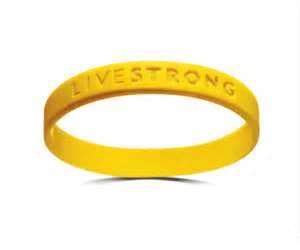
We've all heard the expression "Live Strong," especially in the context of fighting cancer. 

Since my dad's diagnosis, though, I've come to view the meaning of this command in a different light, and I see now that it’s not just for the people who have been diagnosed with cancer, but also for those who are caring for them - and even beyond that to those who are left behind to grieve.

By all accounts, my dad "lived strong" during the ten weeks he was battling for his life against the brutal brain cancer that took first his independence and shortly thereafter his life.  He literally fought with all his might until his very last breath.  

I've heard it said that people die as they have lived, and, in regards to being courageous and strong, definitely that was true for my dad.  And, as for my family, I think we've "lived strong" too, working as a team throughout his illness and since then.

In many ways, it's been the "since then" part of this whole thing that I've found to be much harder, but, to honor my dad and the rest of my family, "living strong" has been and continues to be my goal.  

Sometimes I worry that I'm not being strong enough now, though.  


When I was a teenager, I had a t-shirt that had big lettering at the top of it on the front that said "Trackster's Excuse Shirt." Underneath that were listed dozens of excuses that people often used not to run on any given day, things like, "I'm sore from yesterday's workout," "I think I'm coming down with a cold," "I had to work late," and even "It's too cold outside" and "It's too hot outside."  I loved that shirt, and I wore it often.  Dad and I used to make up additional excuses that we thought should also have been listed on the shirt and laugh; there were many days when I didn't especially feel like running but I did it anyway because the shirt helped me to realize that whatever excuse I had was just that - an excuse.  I remember the day I got braces on my teeth; when Dad got home from work that afternoon after I'd gotten home from the orthodontist, he told me to get my running gear on, and I protested, claiming my teeth were too sore to run.  "Oh, really?" Dad asked with a smile on his face. "Should we put that on the excuse shirt too?" Of course, I laughed and then suited up so we could head out the door to run as planned.

Lately I've been thinking that maybe I need a shirt like that, one that lists all the reasons excuses I so easily come up with these days for not running (or for anything else, for that matter): "I didn't sleep well last night;" "I miss my dad too much;" "I'm grieving;" "I'm too busy at work," etc.  

There's no good reason, only endless excuses, and yet I still can't seem to find the drive to do it anymore.  A few years ago my dad gave me a big magnet to put on the back of my car that says "Runner Girl."  I took it off my car more than a year ago; it just felt so disingenuous, and seeing it every time I walked around to the back of my car made me sad.  Sad that I wasn't running, sad that my dad couldn't be.

That's just one of the things that I used to do that I don't anymore, one of the changes that I don't know the reason behind and that I don't like.  I'm honestly not sure if I should grit my teeth and try harder to live strong or if I should just look at it as a temporary thing that I have to go through and go with it for now; I know that some of this is just part of the process - and that some of it is out of my control.

From the time when I was about 12 years old, I always volunteered to pack the car the night before we went on a family road trip.  I liked being the one who knew where everything we might need during the course of the trip was in the car, from a deck of cards to snacks to a box of tissues and a map. 

I think one of the hardest things about dealing with a terminal diagnosis and the grief after the death of a loved one is having the realization that there is no control to be had and that there is no getting prepared for some things in life.  In essence, there is no packing the car the night before in Real Life.


In grief, you spend a lot of time focusing on, well, you.  Grief tends to make us shut out other things at times, not out of self-centeredness but out of necessity.   It is a rough road, one riddled with obstacles, but one with learning and growing and - with time and effort and luck instead of excuses - living strong, to the best of our ability.  We just have to get through it, in our own way.