Showing posts with label strength. Show all posts

Wednesday, October 22, 2014

Finding My Way

Four years ago today, I was presenting - for the first time in my career - at a national conference.  I had spent the first part of the week with my family at my sister’s family’s house in California and had flown from there to Minneapolis to go to the conference.  My husband and my daughters had taken a flight from L.A. back home where I planned to meet them in a few days after the conference had ended.

Things were humming along.  I actually remember walking out the door of my house to leave on the trip to go to L.A.; I wouldn’t normally remember something like that from years ago, but there were two things that have made that memory stick in my head.  I remember feeling a little more jittery than I typically do when I leave to go out of town, because this time I was traveling in a triangular pattern, first for pleasure and then for business, and I was nervous that I was forgetting something that I would need on the trip.  The second reason that I still remember leaving my house that day four years ago is that I got a concerning text message from my dad just as I was getting into the car to go to the airport.  As it turned out, that was the last text that I ever got from him - but that's not why I thought the text was important at the time I received my dad's message.

When I heard the ding on my phone indicating that I’d gotten a text, I grabbed my cell phone out of my purse so I could read the message as my husband drove to the airport.  “Met with grandmom’s dr to sign hospice papers.  Hope the girls take news ok,” Dad had typed in his typical shorthand form of texting.   As usual, I was able to read between the lines to understand what he meant despite the somewhat cryptic qualities of his message: At the age of 90, my grandmother (his mother) had been very ill for over two years. My parents had just met with her doctor to discuss her plan of care because of health problems she had been experiencing.  She had been moved into a nursing home a couple of years before due to significant cognitive decline, and at that point she had severe swallowing problems and progressing overall physical weakness.  In the meeting, I found out later, my parents had been told that her condition was continuing to worsen and that she likely only had a few weeks left to live.  My dad, acting as her representative for medical power of attorney, agreed that adding hospice services to supplement the care she was getting in the skilled nursing facility was in her best interest.  As his message conveyed, he was concerned about how my daughters and the other grandchildren would take the news of Grandmom's worsening condition.

Although I could tell what he meant by what he had written, what I realized I didn’t know as I processed the news was how he felt.  Like his mother, my dad was never very touchy-feely; there were many occasions in my life that I witnessed him keeping a stiff upper lip so as not to show his emotions and several other times when it seemed like he was just more of the mindset of “Let’s get this over with” than “Let’s think it over and share how we feel about it.”  As he liked to say: “It is what it is … because what else would it be?  But on this day, as my husband drove down the interstate, I felt like I needed to somehow acknowledge the emotions I thought it was safe to guess that he was experiencing, and so I texted back, “You are a good son.  Your mom knows that you love her, and you are doing all the right things to care for her.”  I don’t know why I chose those words or even why I decided to say something that sentimental to him at that time; it isn’t usually how we communicated, and that’s why that moment sticks in my head.  Well, that, and the fact that, as I realized later, in what seemed like such an ordinary instant when I walked out of my house and closed the door behind me that day, I was stepping into a life so different from the way I had known it to be.


When I was about ten years old, my dad entered me into one of the first road races I had entered as a runner, and, for reasons that escape me now, it was one of the few times in my running career that I ran in a road race in which he didn’t also run. 

Like many of the races I participated in during my childhood, this one took place in a small town in Mississippi.  In my mind, the scene at the starting line that day blurs into the hundreds of other scenes like it, but what happened over the next hour stands out as a memory all of its own.  In this race, to my surprise, I found myself in a small group of runners that had broken away from the rest of the field about at the first mile marker.  Or, I should say, about at the point where I thought the first mile marker should have been.  For the first seven or eight minutes of the race, there was silence amongst the four other runners and me except for the sound of our breathing as we ran.  Gradually, each of us realized that we had probably covered a distance of more than a mile, and one of the other runners asked if the rest of us were sure that we were going the right way.  None of us were; we had counted on being able to follow signs or directions given by volunteers along the way so that we would know when we had passed each of the mile marks and where to turn on the course.  As we found out later, though, we'd passed by the first turn faster than the race director had expected, and so there was nothing/no one there to tell us to make the turn and we had continued to run straight down the street.  By the time we realized that we were probably off the course, we were well over a mile past that place where we should have changed direction.  We kept running and eventually saw an old man watering his front lawn, at which point we slowed to a jog and one of the other runners shouted to him, “How do we get back to the community center?” which is where the race finished.  The man looked at us like we were crazy and then pointed back over his shoulder in almost the opposite direction from the way we were running.  For some reason, the five of us still didn’t stop running; without speaking, we all hung a right at the next street corner to head in the direction the man had indicated, and eventually we found our way to the finish line.


Since October 23, 2010, the day when the cancer in my dad’s brain was discovered, in many ways I have felt like I did out there on the course in that race so many years ago: lost, confused, exhausted, and in a state of disbelief as to how the whole thing even happened.  But, also like my experience in that race, I am comforted by the fact that I am not having to cover the distance by myself, and somehow that gives me the strength I need to continue along the course.


And that, I guess, is one way that I have changed, in increments over the past few years: I have come to see and to believe that it is human tendency to adjust despite pain and loss – and that resilience is born of character and nurtured by love and connection.


Friday, November 15, 2013

A Push Towards Perspective

I recently came across something written by a woman that I found to be simultaneously heartbreaking and inspiring.  This article, which ran in Vogue magazine entitled "The Long Road Back: How to Keep Going After the Unimaginable Happens," is the story of tragedy - but it is even more about love and strength and coping.

I found some of the words of the author, whose name is Madonna Badger, to be particularly moving.  When she recounts the two things that happened that she found helpful as she was going through the boxes in the warehouse, it makes me think back to the students with whom I worked in the months after my dad died.  Like Badger, through my work, I saw two things occur that nudged me in the right direction in the early depths of my grief: I too had to stay "in the present moment," and I saw for the first time that, although there was often ample opportunity for the grief that was upon others around me to incapacitate them, the people who made certain choices in the midst of hardship were able to survive without losing more of themselves than they had been forced to through the adversity. That, I guess, was my push towards perspective.


Sunday, December 23, 2012

Courage


"Courage is rightly esteemed the first of human qualities ... because it is the quality which guarantees all others." ~Sir Winston Churchill

When I was a freshman in college, I took a class during which we learned how to rappel.  The culmination of the instruction of that part of the class was that each student had an opportunity to descend by rope from the top of a tower that stood three stories high. 

At the beginning of the semester, in my 18 year-old mind, that endeavor didn't seem to me like it was going to be too tough.  I wasn't scared of heights, and I was in pretty good physical condition.  I listened carefully to the instructor talk about the technique and the safety information, and I watched videos of others rappelling.  When the day of the descent finally arrived, I confidently climbed up to the top of the tower, hooked in to the roping gear, and backed up to the edge.  And then I looked down - and that's when the fear hit me.


I tried in vain to talk myself into stepping off the ledge for several minutes.  The instructor, who had positioned another instructor at the top, shouted words of encouragement to me from down below.  My legs just wouldn't move.  Finally, the guy at the top said, "The longer you stand there, the harder it's going to get to take that first step.  On my count of three, you're going to step off.  One, two, ..."  I took a deep breath, and I did it.  The warmth of the sun on my face, the feeling of gliding so freely, and the big burst of adrenaline all hit me at once, and I loved it.  It was, in the true sense of the word, awesome.  

But the best part of the descent was at the bottom, and it came from the words spoken by the instructor, words that I have thought about many times since that day:  "And that," he said as he turned from watching me to address the rest of the class,  "is a perfect example of the difference between courage and bravery.  Bravery is something a person can be born with, but courage is something we have to dig deep to find.  It's natural and often even smart to be afraid, but, as long as you are prepared, you can't let that stop you from forging ahead - and that's courage."

Before that day, I had never considered that there was a difference at all between courage and bravery; I actually thought they were synonyms.  Upon further consideration, though, I began to see that there is a distinction between those two words.  Bravery is the ability to confront pain or danger when one is not afraid.  Courage, on the other hand, is the ability to take on a difficult situation or pain in spite of the presence of fear.  Courage requires using a thought process in order to overcome a natural emotion; it is the willful choice to forge ahead regardless of the possible consequences.  A courageous person understands the risks of the task but is driven to participate anyway for a greater purpose.  

From my perspective, there are a couple of different types of courage:  Physical Courage, which often involves overcoming fear of the risk of pain or death to do things - like rappelling, getting up to try again after falling off a bike, running into a burning building to rescue someone, climbing a mountain, or undergoing a medical procedure.  Here's a video that gives a great example of physical courage (it's 17 minutes long but well worth taking the time to view it!):


And then there is Mental Courage, which may involve doing something that poses a risk of something negative socially happening, like embarrassment or rejection.  This includes things like standing up to a bully, giving a speech to a crowd, disregarding peer pressure, and being a leader.  It also encompasses ethics and doing the right thing, even when that puts one at risk for consequences such as disapproval of others.  It's pushing past a fear of rejection to put oneself "out there" by being true to one's own beliefs and essentially to oneself.  And that is how courage is linked to the most bonding of human traits: vulnerability.  A person who has the courage to accept that he isn't perfect but the depth to love himself and to see himself as worthy anyway not only ends up being a happier person but also gains a different kind of strength than cannot be gained in any other way.  And, in accepting himself as an imperfect being, he shows others that variances - and vulnerability - are the essence of the beauty of life.  


What I have taken away from that is the understanding that courage has to do with perspective and with the way we adapt to the challenges and to the circumstances of our lives.  

Without a doubt, what my dad had a great amount of physical courage, and I think that was likely something about him that a lot of people noticed and admired.  What I have found to be even more impressive about him, though, and what I hope to go out having had is the courage to be imperfect, the compassion to be kind to oneself and to others, the conviction to stand up for myself and for people and things that are important to me, and, last but not least, the courage and the confidence to show vulnerability, which, really, is the thing that connects us as human beings. Vulnerability, like the imperfections seen in granite, is what makes people unique, memorable, and beautiful. 


Friday, December 21, 2012

Dog Tags


Sometimes when I think back to during the time when my dad was sick, I remember a detail that I had forgotten or overlooked in my memories before.  

Today I remembered his dog tags.


When I was growing up, whenever I asked my dad about his experience serving in Vietnam, he always talked about how his job there was to guard a building with weapons in it, often on an overnight shift.  

My dad was never a "night owl;" as far back as I can remember, he was much more of a morning person, and I guess that was true when he was in the service, too, because he often commented when he talked about that time about how hard it was for him to stay awake on his overnight shifts.  He said he usually ran around and around the building he was assigned to guard so that he would stay awake and alert during those shifts.  The only problem with this plan, he reported, was that he had to wear his dog tags at all times and, as they hung from the chain around his neck, they drove him crazy bouncing against his chest as he ran.  Ever the improviser, though, he thought of a solution to this problem too: he took the dog tags off from around his neck and put them in his pants - in his jock strap, to be exact. 


It's kind of funny to think that a person can be proud of someone else before that person was even born or before they knew each other, but I know it's possible, because, picturing my dad as a young soldier in a foreign land, before I was born, doing what he had to do to get his job done and to defend our country, I feel such a sense of pride and respect, the same pride and respect that I have had for him throughout my life. 

But those dog tags from Dad's days in Vietnam aren't the ones I think about most often these days.  The dog tags on my mind are the ones that Dad wore on a chain around his neck as a 66 year-old man as he trained for the Ironman triathlon.  He tucked those into his shirt as he rode his bike or ran, and, the day before he became disoriented on a run and our campaign against his brain cancer began, the chain that held those dog tags broke.  And so, on that fateful day, he set out for the first time in many months without any form of identification at all.  

I think when most people think about dog tags, they think about toughness.  That's what I think about, too, because it was that, along with his strength and resilience that day that allowed Dad to dig deep enough so that, even in his state of confusion coming from the tumor the size of a racquetball in his brain, he could remember not just his home phone number (which was called first by the police but went unanswered because my mom was out of town) but also my aunt's cell phone number, which he also recalled and then gave to the police who had been called to the scene because he somehow also remembered that my mom was out of town that day and realized he needed to call someone local.

I have spent time, some while Dad was sick and even more since he went on ahead, thinking about how things would have likely gone had he not had the fortitude to pull out that information in those few moments before he was taken to the hospital by ambulance, before he had a couple of seizures, and before he quit breathing and had to be put on life support temporarily until he could be stabilized.  It is nothing short of terrifying to think that all of that would have been going on and no one in our family would have been able to be notified so that we could all get there to be with him.  It's horrifying to think about the fact that he would have been a Missing Person for an undetermined amount of time, because, with my mom out of town overnight that night, it is highly likely that no one would have realized that he didn't make it home after his run that afternoon.  We would not have known that anything out of the ordinary was going on.  Again and again, it hits me that, even with as bad as it was when he first got sick and throughout his illness, it could have been worse.  At least we knew where he was, and what was going on with him, and at least we were able to be with him. 

Dad, wearing the dog tags, competing in what ended up being his last race, one month prior to his diagnosis of brain cancer
In the days just before and just after his surgery, Dad worried a lot about what he called "loose ends."  As it would be for any of us whose life was put on hold in the blink of an eye, it was unnerving and extremely anxiety-causing for Dad that he had not been able to prepare for the time he was having to miss work and everything else for which he considered himself to be responsible.  In the midst of the constant stream of worries he had about his health and about needing to take care of the responsibilities in his personal and professional roles in life, he said he wanted to get the chain that had held his dog tags fixed, "so that I'll have it ready as soon as I can get back on the road."

And so, sitting in the hospital room with him in the Neuro-ICU, I searched on the Internet and found a company that sold replacement chains and ordered one for him; he was visibly relieved when I told him that a new chain was being sent to him in the mail.  And that's where the meaning of those dog tags deepens in our story; instead of standing only for toughness, Dad's dog tags also represented Hopefulness, and we desperately needed everything we could get to bolster both of those qualities as we entered into a more grueling battle than any of us could even imagine at that point.

Sunday, October 28, 2012

Waving A White Flag


During track season in my sophomore year in high school, my team competed in a track meet that sticks out in my mind more than many of the rest.  My last event for the day was the mile run, my favorite and my strongest event.  As the starter's gun was fired to signal the beginning of the race, the rain that had been steady but fairly light all day long turned into a torrential downpour.  Over the course of the first three laps we ran around the track, there was lots of accidental jostling within the front pack of five or so runners; not only was the track slippery, but the pelting rain was making it hard for everyone to see.  As we charged into the curve of the final part of the race, the usual volleying for position was going on amongst the runners, and one of the girls behind me stepped on the back of my shoe.  The shoe didn't come off my foot, but the mishap made me lose my balance, and I threw my left hand out to the side to steady myself so that I wouldn't fall down, knocking into the runner who was to my left in the process, which in turn caused her to step out of bounds on the inside of the track.

I realized that I had bumped into the girl, but, because I kept running along with the rest of the pack as this split-second chain of events was occurring, I didn't see her step over the line.  As I eyed the finish line at the end of the straightaway as we came out of the last curve of the track, I put my head down to block the driving rain and gave it all I had, finishing a step ahead of the pack to cross the line in first place.  

I remember wiping my rain-soaked face and looking over at Dad who was standing at the fence at the edge of the track and seeing the pride in his eyes.  I knew he was thinking, "Well played," and then I saw him shift his gaze back towards where the other runners were standing on the track, and I knew he was reminding me to congratulate them.  As I turned to step into the circle of girls hovering in the rain just past the finish line, one of the lane judges stepped towards me and said, "You are being disqualified for fouling in the curve."  I was stunned; I didn't say anything back, but my coach stepped in and a conversation ensued.  It was a fruitless one, though, and the judges' decision stood.  

I felt hot tears running down my face as I walked off the track towards my parents in the cold rain.  I was disappointed, and I was embarrassed.  Sportsmanship was very important in my family, and I felt like people would think that I had somehow been trying to win by cheating, even though the mishap was obviously an accident.   After the rest of the track meet was called off due to the weather, the ride home on the school bus with my team that afternoon seemed twice as long as the ride to the event had seemed.

The next morning, Dad woke me up and told me we were going to the track to run.  I usually took the day off from running on the day after a race, but I was still so disheartened from the day before that I just got my gear on and climbed into the car without questioning.  We were silent as Dad drove to the track and parked the car and as we both got out of the car and walked onto the cinder track.  "Here's the deal," Dad said. "I don't want what happened yesterday to make you doubt yourself, and so we're going to run it again.  As long as you can run the same time you ran in the race yesterday, in our minds the victory will stand."  

We jogged a couple of laps to warm up, and then we shifted into race pace to cover the four laps around the track in step.  Dad offered a few words of encouragement and pacing advice along the way but was mostly quiet until he looked down at his stopwatch as we crossed the finish line.  "Ten seconds faster than yesterday," he told me.  "That's it: now we're not going to worry about yesterday."

I've thought about that day - not the day of the track meet, but the one when we were out there by ourselves on the track the day after - several times since my dad went on ahead; the "leave it all behind" mentality that he had is forever etched in my memory.  But that's a much bigger challenge in grief, way bigger than I ever thought it would be.  Leaving it all behind really isn't an option in this type of situation.


Nothing in my life prepared me for the loss of my dad, not even in the least, including his 10 week-long illness.  I'm still surprised by how robbed I feel, both on my dad's behalf and on my own.  The things that happened during the time I spent with him while he was sick play in my head over and over again, and, to be completely honest, as hard as it is to think about those days, a part of me doesn't want to leave it all behind because I don't want to lose even a single memory that I have of him and of my time with him.  

I am learning that grief is full of surprises, most of which I have found to be of the unwelcome variety.  It's surprising how it can feel so lonely, so endless, so awful, and I've been told that's true pretty much from the time of the loss on.  The threat is always on the horizon, and that's something I wish I didn't have to know.  

At some point during my first year of grief, when my husband found me holed up crying for the 10,000th time, he just looked at me and then said very quietly: "You're not the only one who misses him."  In that moment, I opened my eyes to the presence of the grief and hurt of others; I'd been so consumed over losing my dad that it was only when that was pointed out to me that I could really start to see the loss from another person's perspective.  And, in doing so, another round of hurt went through me, and another round of feeling useless and helpless, for I was already doing all I knew to do and yet nothing seemed to be getting any better.

And even today, there are times when I have to force myself to remember that I am not the only one this loss has affected so very profoundly.  Like a lot of people who are grieving, I tend to isolate myself when I am upset, and that seems to make me feel like it is only I who is still feeling this amount of pain, feeling stuck and angry and so much more.  Of course, I know in my head that isn't true, but sometimes it's all I can do to keep myself together and I worry that at some point I may fall short of the strength needed to hold another person up too. Although at other times when I am able to see through the fog and realize the grief that is bearing down on others I love, I feel a sense of protectiveness and of bonding that somehow helps to lessen my own grief, and I know in my head and in my heart that the only way that anyone gets through any of this is through togetherness.  

The second birthday of my dad's that we had to spend after he went on ahead hit me a lot harder than I thought it would, another surprise I could have done without.  Truthfully, it has been only with the support and love of my family that I have gotten through the shit of the past two years, and this point was driven home yet again on my dad's birthday when I realized that had it not been for my family I would have surely spent the entire day - if not longer - crying hysterically.

I'm really not good at accepting comfort when I'm sad, and I have to say I've done a LOT of crying behind the scenes because of that and because I don't want my sadness and grief to permeate everything for everyone.  Many nights I've lain in the bed on my side with tears streaming down my face and into my ear and onto the pillow, and my husband just puts his arms around me and lets me cry, because we both know that there's not really anything to say that can make it any better.  The depth of the emptiness and the sadness that bear down on me at times like that continues to surprise me.  I believe that at some point life will give me moments that seem so much brighter than those moments seem dark, but I also know it will never be the same without my dad.  I know that those of us who were lucky enough to know him will always feel a piece is missing, but I also know that we will proudly carry him forward, not just to tomorrow, not just to next year, but into future generations who will undoubtedly hear many, many "Wild Bill" stories in the years to come.  I hope that in carrying on in his honor, at some point in the future we will be able to leave behind much of the sadness and the pain.


"This emotional pain caused by loss suffered does not move toward forgetfulness.  It moves, rather, in the direction of enriched remembrance; the memory becomes an integral part of the mourner's personality.  The work of mourning has been completed when the person no longer appears as an absence in a barren world, but has come to reside securely within one's heart.  Each of us must grieve in his own manner and at his own pace.   Periodic waves of grief are often felt for the remainder of one's life.  The mourning process must be given the freedom to find its own depth and rhythm; it cannot be artificially accelerated.  A loss, like a physical wound, cannot heal overnight.  There is no way to hurry the stages of tissue growth, and there is no way to speed up the healing process of mourning.  But, when mourning has been completed, the mourner comes to feel the inner presence of the loved one ... the person is present in a new form within one's mind and heart, tenderly present in inner time without the pain and bitterness of death.  Once the loved one has been accepted in this way, he can never again be forcefully removed."  ~Robert Chernin Cantor in And a Time to Live: Toward Emotional Well-being during the Crisis of Cancer, Harper & Row, 1978.

Monday, August 27, 2012

Counting Backwards


                                    "Grief is a love story told backwards."


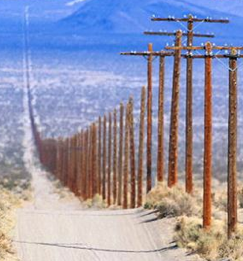
Many times in the past when I've been out running and have ended up on a two-lane road without much traffic, I've often counted the telephone poles along the way to mark both the time and the distance covered.  

Similarly, whenever I’ve run a long race like a marathon, I’ve found that it helps me mentally to adjust the way I think of the miles ahead so that the numbers stay small from the halfway point on.  For example, at the 15-mile mark, I say to myself, “I only have 11 miles to go” instead of saying “I’ve already run 15 miles.”  Again, it’s a mental game as much as it is a physical challenge, and it often comes down to perspective.  I'm sure I learned that trick from my dad on one of our many runs together when I was growing up, and I've realized its value many times over the years.


Another thing at which my dad excelled (besides running)  was calculating things in his head, "running the numbers" as I've heard it called.  I'm pretty sure he developed that skill in the distant past by thinking about time/speed/distance while he was out on long runs.  For as long as I can remember, he could work out in a matter of seconds just how fast each part of a race needed to be run in order for the finish-time goal to be achieved.  Doing "mental math" was definitely a strong suit for him, and, at some point, this ability became a talent that furthered his career in addition to making him a better athlete and a valued coach.  


Lately I've been thinking about how much I wish I could know when the pain of the grief I've been experiencing since my dad's death will lessen; I wish I could mark the time or distance covered or have some way to count down how much further I have to go before it gets any better.  I wish I could do the "mental math" so I could know when I will be able to celebrate my dad more and mourn him less, but I'm just not sure how to get to that point.

As stabilizing as it was to have my dad in my life, it seems like his death has had the opposite effect on me.  I've never before had to work to have a glass-half-full perspective, but that's what has resulted from this loss. Through all of the emotions of this grief, though, I've not lost sight of the fact that if not for the strength and the perspective and the inner joy given to me by my dad, I might not stand a chance at coming out on the other side intact. Before Dad went on ahead, when people who knew me met my parents for the first time, I felt like they got a good look at whom I was and how I got to where I was.  Now, though, with half of the equation not on site, I feel like it's much harder to know who I am, even knowing the stories that I can tell of my dad, maybe even for me: it's like an identity-crisis of sorts, but not one that can be solved by changing careers or buying a sports car. It's a point of no return that is resulting in me becoming a changed person, albeit not per my choice. Before I was this up-close to it, I never saw grief as this complicated or this powerfully altering


For me, the first year after my dad's death was full of tears, shock, anger, disbelief, confusion, and more tears.  There was lots of auto-piloting, lots of just getting through it, and lots of telling myself that the next day would be better, even though I wasn't always sure that it would seem that way.  In many ways and for many reasons, I am finding this second year to be even more challenging.  The trauma isn't over: the further out we get from the last time my dad was here on earth with me and the longer I have had to go without him, the more I miss him, but the less I feel that other people understand and feel like tolerating my grief.  It's so troubling the way this grief often feels so indulgent and how it feels so - for lack of a better word - mopey much of the time to think about or talk about him, even though he is so frequently still on my mind.  It feels abnormal to still be this sad, this angry, and to still feel as shocked as I do when the realization hits me again and again that he's gone.


"For some people, the second year after a major loss is even more profoundly painful than the first.  The reason for this is that the fog and blur of the first year has started to lift.  Deep and intense pain reveals itself.  Do not be afraid if this happens.  Continue to ride the waves of grief, breathing into it, and letting the process unfold as it needs to."  ~Ashley David Bush, in Transcending Loss: Understanding the Lifelong Impact of Grief and How to Make It Meaningful

When I think about how long I’ve been without my dad, I wish I could count backwards as I moved ahead towards something that would matter; I wish I could think of some mind-game or strategy that would somehow help me feel better.  When I think about how long this loss will hurt this badly, I wish I could predict.  Being about to count backwards would allow me to focus on a goal, to breathe through the pain like Lamaze breathing during childbirth.  But that's not what we have in grief, and perhaps that's the toughest part of all.


When I think about grief and those five stages everyone talks about, I'm just not sure where I am in all that.  They all seem so swirled together.  I can't really check off any of them on the list, not even denial (the "first" one!).  I recently read about another model of grief - J. William Worden's Four Tasks of Grief - in hopes that there'd be something there about which I could say "Been there, done that."  He says there are four tasks (or "Things To Do") in the grief process:

Task 1: Accept the reality of the loss. - This sounds a lot like Kubler-Ross's model, except that Worden says that "healing" begins with acceptance instead of listing acceptance at the end of the stages in the process.  He suggests this can be done through funeral and/or memorial rituals like viewing the body or tending to the grave.
As I've mentioned, I don't think the term healing can be applied to grieving the loss of a loved one.  Like the cancer that my dad had, there is no cure for grief.  Perhaps "mitigating" is a better term for what we should hope for in this process.

Task 2: Process your grief and pain.  -Worden points out that there are lots of different ways of doing this.  He suggests that it is ok to process grief through action instead of just by thought, if the action is productive in moving through one's grief instead of serving to avoid it.
I'm not sure if I can put a check-mark beside this one or not ...

Task 3: Adjust to the world without your loved one in it. - Again, this can be done in different ways by different people.  Worden gives examples of meeting this challenge by doing things like celebrating holidays or getting through important events despite the fact that our loved one isn't able to be there with us.
My family and I have done some of this, like taking family vacations since Dad went on ahead, but I will admit that there are some things that I still haven't "adjusted," like taking his cell phone number out of my list of Contacts on my phone.  (Maybe I can get partial credit on this one ...)

Task 4: Find a way to maintain a connection to the person who died while embarking on your own life.
Again, I think this can vary from person to person, even within the same family.  Some people like to talk about the loved one they've lost; others don't.  Some (like me) find it comforting to write.  Some may participate in things like volunteer work in honor of their loved one.  Whatever the path we choose, though, I think we'll know it's right for us personally if it helps us to feel better (connected), even if just a little bit.  I think I get credit for this one; I just hope it's helping me also to move forward (not "on" - I hate thinking about "moving on" without my dad!).  Sometimes I think writing about my dad and grief is adding to the stagnancy of my grief, but then a few days go by and I can't quiet the calling to jot down my thoughts about what's going on in my head or in my heart.


I'm still not sure what the grief process is really about - maybe learning how to still have a connection to my dad, maybe it's convincing myself that I can go on without the ongoing support of one of the people who made me who I am, maybe it's accepting that I have no control but yet I still have to live the best life that I can to honor my dad and others I love.  


Saturday, January 28, 2012

Part 41 – The Turning Point

Continued from Part 40


I suppose there comes a time in the life of almost every person with a terminal illness when they and the people around them realize they have turned a corner that is not for the better as they had hoped.  It’s that day, that hour, that moment when the stakes are changed and so is one’s perspective, when the focus of treatment becomes different from when it was a Cure.

I think that Turning Point in Dad’s illness was different for my mom, for each of my siblings, and for me.  For Mom, I think it was on our trip to Duke, first when she realized that Dad’s concept of time, which had always been absolute in him, was totally gone, and then when we got to the Brain Tumor Clinic and she noticed that Dad was the only patient there with his level of impairment.  As we rolled down the interstate and then as we rolled his wheelchair into the clinic the next day, her hope for a Cure was dashed.  (Side note:  People around that time kept telling us that we just needed to get used to a New Normal, and every time I heard that, I wanted to scream, “TO HELL WITH THE NEW NORMAL!  I WANT OUR OLD NORMAL BACK!”)

Our brother Lee has said that he saw the changes in Dad as so blaring when he saw him around Thanksgiving that he felt in his gut that Dad was not going to get better.  

For my sister Jennifer, the Turning Point came on the afternoon when she was at our parents’ house alone with Dad before his second hospitalization -- not when he fell, but after that, when he was in the bed, looking so frail, so helpless, and with his breathing so labored that she felt compelled to videotape it so that she could believe it, process it, and document it.

The Turning Point for my sister Nancy came a little later in our story, on the day after we brought Dad home from the hospital for the last time, as she listened to his voice get weaker and weaker and as she watched him, wrapped in blankets as if he were in a cocoon, being picked up by our husbands so they could move him from the bed to the couch.  He was so afraid that he wouldn't be able to communicate with us for much longer.  We were so afraid that he would fall off the couch because he could hardly move and that it would hurt him to move him.  We were all just so incredibly afraid.  


The Turning Point for me came as a result of a one-two punch on the second full day after Dad was moved out of the ICU into a regular room, three days before New Year’s Day and two days before we took him home.  The oncologist came by for his morning rounds and told Dad “the only thing in the way of going home for you is your strength.”  He ordered more OT and PT, and thus the gauntlet was thrown down; so depleted and yet so determined, Dad began talking about how he was going to exercise and eat,  “even more than before,” he said.  “I just want to do whatever it takes so that I can go home!”  

That afternoon, the OT stopped by and, with Dad lying in the bed, had him do 15 minutes of arm exercises (“Is that IT??” I wrote in the margin of the Notebook when I realized the session was ending after that.), and then the PT came in and helped Dad sit on the side of the bed for ten minutes.  After she had left, Dad realized that was going to be the sum total of his rehab activities that day, and he said, “I really think if I am going to have any chance of getting out of here, I should get up out of the bed.”  I summoned the nurse and a nursing assistant and told them of our plan.  Both were hesitant and doubtful, but, I thought, they don’t know my dad and they don’t know me we ARE going to make this happen.  

Gritting his teeth and with almost total support to keep his legs from buckling and then with full support to slide his feet one at a time across the floor, Dad made it from the bed to the hospital-grade recliner before collapsing into the chair.  “Let’s see if you can stay up in the chair for 30 minutes,” the nurse said, as she and the tech left the room.  The next half-hour seemed excruciatingly long; my sister and I tried to cheer Dad on while he gutted out each minute.  He said he was cold and that he felt “achy all over,” and then, when his time was up and after we had helped him back into the bed, he got a terrible muscle cramp in his thigh and hip.  We could actually see the muscles contracting as Dad writhed in pain after the transfer.  We tried massage, we tried repositioning, we tried stretching, we tried a heating pad, and, finally, amidst deep and wounding pain, he begged for medicine.  The orders on the chart didn’t include anything that would even touch the pain.  DAMN the process that it takes to have to call the doctor to get permission for pain medication for a terminally ill patient.  Isn’t losing control and slipping away torture enough?  It took well over an hour to take away the pain from that horrible cramp in Dad’s muscle, and, as we learned over the next few days, the trauma of the episode could not be erased from his memory, taunting him and making him afraid after we left the hospital that we would not have enough medicine to temper his agony if the pain came back. 


Despite the pain and exhaustion, Dad took in a lot of calories that day, so much that by that evening he was nauseous from having eaten so much more than he had been used to eating.  When the dinner tray came that night, he said with a mixture of dread and fear in his voice, “Oh, no!  Not food again! I can’t stand eating – it makes me hurt worse!”

Watching him that day, I could see the anxiety and the weight of the burden of the task that he saw before him; eating had become not just an obligation and an encumbrance but an insurmountable challenge for him. Over the course of the days before, he had started apologizing and making excuses about not eating whenever I walked into the room, and, when I saw the deep remorse and the sorrow in his eyes, I knew it was not really a choice that he could make anymore. His body just could not do it. “The Deal is off,” I told him that night with tears in my eyes.  “I am so proud of you for trying so hard to eat, and from now on you can eat whatever you want, whenever you want, or not.” 

“Will I still get to go home, though?” he asked me earnestly.  

“Yes, Dad,” I told him.  “I just don’t want you to worry anymore.”  And then I turned away from him to hide the flood of tears that streamed down my face, an outpouring that would go on for the next week as we made the arrangements to bring Dad home, as we cared for him at home as his condition continued to worsen, and as we watched him slip away.


Coming Soon ... Part 42 - Gearing Up