This story seeks to increase awareness and understanding of the unique needs of individuals diagnosed with life-changing illness or injury and their families by providing insight into the life of a man as he went through diagnosis and treatment of brain cancer (Glioblastoma Multiforme - or GBM).
It always
feels strange to have something significant going on in my life that people
around me aren’t aware of.I’m sure
that’s true for most people; one common example of this is when it’s a person’s
birthday and most of the people with whom he or she crosses paths that day don’t
know that it is.Whether it’s something
good or bad, oftentimes it seems like the information just isn’t comfortable or
appropriate or relevant enough to share.In many cases, I think it would feel awkward, somehow attention-seeking or maybe even like bragging, to tell the people around me, and in some cases
I don’t really even want them to know for various reasons – but it still feels
odd, as if I am driving on a side street or an access road alongside the main
highway.
That’s how
it feels to me going into the week that marks three years from the time my life
– and essentially my perspective and my bearings – shifted, the week that holds
the series of days during which my dad was taken to the hospital by ambulance, when we found out about the mass in his head, when he had surgery,
when we got the definitive diagnosis – and his 67th birthday which
we spent hunkered down in the Neuro-ICU, in shock and in terror.
There is such
a maelstrom of emotions and thoughts going on in my head right now, a source of
confusion that makes it difficult to know how to identify my feelings or what
needs to be done to get me through the time ahead, by me or by anyone else. Over and over, I wonder in shock how a span of three years
has passed already.I wonder how we got
through those days that seem even more unbelievably difficult from my
perspective now than they did at the time.I wonder when each of the series of shifts in me occurred after that first shift – and when, if ever, the process will slow down or come to a halt. I wonder whether it is better to try to forget about the panic and the pain of the days of my dad's illness or to let the remaining sadness and the swirl of other emotions that goes along with the anniversary of that first week play out; I wonder if sharing my feelings and my perspective is the right thing to do.
Remembering
what was happening at this exact time three years ago is oddly both grounding and
disconcerting. Thinking back about what my dad and the rest of my family were doing in the weeks and the days leading up to the beginning of the trauma, it was as if we were on an
airplane right before the plane hit an air pocket causing a sudden drop. In regards to
the significance for me of the upcoming days, a lot like the people around me now, back then I had no idea that a shift
was happening, that something was occurring in those days that was affecting someone close to me and that would eventually change everything.
My dad, helping his youngest granddaughter across a rocky path, just weeks before his diagnosis
During the ten weeks that my dad was sick, whenever I heard someone use the phrase "at least" in reference to my dad's illness, my gut burned with fury. I didn't want any at-leasts, or rather I didn't want to have to have any. I wanted my family to go back to the way it was, and, as I tearfully texted my husband late in the night after we brought Dad home from the Brain Tumor Clinic at Duke, I wanted my dad back. It seems selfish and childish to me now, but I was in a state of shock and disbelief that that changes that had occurred in such a relatively short period of time had happened. The doctors at Duke had promised us that the treatment Dad had gotten just after his appointment there was like "magic;" they told us that within 24 hours of getting the medicine we would notice an improvement. Instead, though, probably due to the toll the stress of the trip had taken on him, he seemed worse. To me, there certainly didn't seem to be any at-leasts in the picture at the time.
Dad, competing in a half-Ironman triathlon just weeks before his diagnosis
The at-leasts poured in from seemingly everywhere while he was sick and for awhile after he went on ahead; I realized even on my worst days of rage and despair that everyone who said those words did so in an effort to help: "at least he had his family around him the whole time he was sick;" "at least he had good insurance;" "at least you got to spend those extra weeks with him;" and then, the hardest to swallow, "at least you were with him when he died." We even got a few at-leasts that weren't true ("at least he didn't suffer" being the most blaring untruth). People were just trying to help, I told myself then and in the months that followed. I knew it was true; I just hated that I was suddenly on the receiving end of such a phrase. Just having part of what I had or should have had didn't seem good enough.
The flag at half-mast at the cemetery on the day of dad's burial
Over the past six months or so, though, I've been thinking more about those at-leasts, and I've started to see them a little bit differently. Don't get me wrong: I still long for the whole; it's just that I'm starting to see the value in the in between.
I think the change has come from my reading about the struggles of others - their challenges, illnesses, and grief mostly - and seeing that the people who seem to come out ok (that is, those who don't end up with a completely bitter outlook on life, one that seems so damn disrespectful to the people in their lives including, in the stories of grief, the person for whom they are grieving) are the ones who lean at least a little bit into the at-leasts.
My dad wasn't a big believer in thinking about Worst Case Scenario; although he like to plan ahead, he frequently said that he thought worrying was a waste of time. I'm actually not sure what he thought about at-leasts, if he thought about them at all. I know he was a positive thinker, though, and I can see now that at-leasts fit into to that way of thinking, which is further evidence that it's not a bad idea for me to reconsider my view on that point of reference.
From this vantage point on the road of grief, I can see the value of at-leasts. Saying "at least" in reference to one's own troubles is a way of keeping perspective; it's a way of reminding ourselves that, while we are powerless to change certain situations and to stop certain things from going wrong, we have a choice in how we view things, even (and maybe especially) in the midst of tragedy and hardship.
And so I have changed my opinion on at-leasts: I believe in the goodness of at-leasts and of positive attitudes;
I believe that each of us has the power to take tough circumstances and bad
breaks and find the good in those situations.And that, more than anything, is what gets me through the day now.
Continued from No Answers - Part 2: Informed Consent
There are some questions that are probably commonly asked by people who are left behind after a person with a terminal illness dies, questions to which I realize there are likely to be no answers but that keep coming back to me nonetheless. Some of these are centered around patient care; as a health care worker myself, I fully understand the difficulties of staffing shortages, paperwork demands, insurance issues, and the like. But I also think that there are unfortunately some health care workers, including some doctors, who aren't really focused on the quality of their care. We came across some of those in my dad's case, and I will always remember them, just like I will never forget those who provided my dad and my family with outstanding care and compassion. I just wonder if any of them will remember my dad.
I think there should be some kind of required continuing ed for physicians, and maybe for nurses and some other health care workers too - especially those who frequently treat patients with catastrophic diagnoses - a training that could help them to realize (or to remind them) that patients are PEOPLE, not cases or numbers or statistics. I view much of what happened in my dad's care as being a symptom of what's wrong with our health care system (and maybe even with our society) today: so often we just accept and often even continue to put on a pedestal the physicians who don't or can't take the time to stay on top of patient care as we FIGHT for treatment, for attention, for proper care. The utter lack of case management and the absolute lack of follow-through and follow-up are perhaps what disturb me the most about what went on during Dad's illness.
Here's something else I wonder about: how much - and what kind of - training is given to physicians, in particular to oncologists - about helping patients and their families deal with end-of-life decisions, and about coping with such matters themselves? A thought that keeps coming back to me again and again is this: I know physicians take an oath to "do no harm," and yet in some cases those same doctors continue to prescribe aggressive treatments and fail to present hospice - or other types of palliative care - as an option, presumably based on the fact that those doctors assume the patients want to fight to the end. How much of a doctor's own perspective is imposed on that of his patients? Even the most well-meaning physician could feasibly become so emotionally attached to a patient that he forms an opinion based more than just medical knowledge about what choices that person should make, and that could easily impact the type or the amount of information he presents - or the way that he presents it - to the patient and the patient's family. And so the question becomes - where does the "treatment" end and the "harm" begin? When does the good (or the possibility of good) stop outweighing the bad, the awful side-effects and the risks?? It becomes a judgement call, one that can easily be made with emotion interlaced with the medical knowledge. In fact, isn't that what we want in a doctor: someone who cares about us on a personal level?? And yet that very situation could affect our care by playing into how our doctor handles things on down the road. I think this is particularly tricky in the case of an oncologist. Cancer doctors are in the business of providing Hope to their patients. Many of them spend more time per appointment with each patient than doctors in other specialty areas do, and they usually see their patients more often than other doctors do too. As well, the subjects that are discussed within the walls of the rooms in the oncologist's office are very often much more emotional than the usual chit-chat that goes on in the offices of other doctors. All of this leads to the establishment of more of a connection between an oncologist and his patients - again, not at all a bad thing, but something that must enter into the recommendations given about treatment, including end-of-life treatment issues.
In a situation with a terminal diagnosis, I know all too well how very hard to figure out the balance between hope/pushing forward and acceptance. The oncologists we dealt were only recommending aggressive treatment; looking back, I have to wonder if it was because they were full of hope/faith or if that was just their focus and their training. I know that some oncologists are better about that than what our experience was and that some try their best to keep a patient's overall well-being in mind rather than just trying to have a great case to write up in their medical journals. But still, when the patient is you or your loved one, you have to do two things: you have to have Hope, and you have to have faith that your oncologist is looking out for your best interests (and that he/she knows what those interests are). What we found is that in a situation like ours Hope is linked to goals that peel off in layers like an onion - hope for a cure, hope for treatment that gives more quality time, home for comfort, hope for him to be pain-free and hope for peace.
As I said in the last post about informed consent, the options just weren't presented to us or to Dad; the oncologist originally told us that we would be taking Dad home from the hospital just a few days after brain surgery, but, at the urging of the hospital physical therapist who had seen Dad a total of one time, the doctor ordered that Dad go to rehab, where essentially Dad's care was managed for the most part by the Rehab Director, whom we later realized knew little to nothing about GBM and its treatment. We saw the reasoning behind Dad's participation in a short-term rehab program; the way we looked at the treatment as opposed to a "just going to a beach" scenario was to picture my dad a little further down the road. We hoped - and we believed - that Dad would improve which would make the rehab stay well worth the effort, and we knew that Dad would want to go "all in" until he couldn't.
At one point in looking back at what we decided on for my dad, I said that if I had to do it again I wouldn't have had him go to three weeks of rehab (because he didn't get better functionally during that time), but then my mom pointed out that if he hadn't gone, he wouldn't have even had the chance to have gotten functionally better and we would probably always think it was because we didn't have him go. In other words, we would have linked the lack of quality of his life to our decision for him not to go to rehab, even though we learned through having him go that there wasn't a link or a possibility for him to gain more independence, based on his individual set of circumstances.
Another obstacle for physicians in caring for terminally-ill cancer patients has to do with the rules of hospice: in order to qualify for hospice, a cancer patient not only has to have a life expectancy of less than six months but also must agree to forego any further chemo treatments of a "curative" nature. When you think about it, that isn't really fair, especially considering that patients with other terminal conditions aren't forced to stop their medications to enter into a hospice program. I can see how it could be difficult for an oncologist to switch over from thinking "I am going to help this person beat the odds" to a mindset of comfort-care only. I can see where an oncologist would keep wanting to offer more - a Plan B, and then a Plan C, and so on, offering Hope, if not for a cure then for improvement. I can see where the concept of quality of life (what even is that for most terminally ill patients?) can be confusing. Once the cancer has set in for good, there often isn't a whole lot of quality, especially if brutal treatments like some chemos are continued, and so it become a judgement call, which must be made based on the experience of the physician and, of course, on human emotion.
Consider this: when a person goes to the doctor for a more run-of-the-mill illness, like a sinus infection or or a sprained ankle, the doctor doesn't give that person a choice as to whether or not he should be treated or as to what the treatment will be. As long as there is a clear course of action in treating the condition, the doctor orders the treatment.
In rarer cancers, and certainly in cancers that are being considered terminal, that changes. The oncologist presents the patient and/or the patient's family with options and gives them the power (and the burden) to make a choice. Sometimes the patient even finds out about treatment ideas on his own and presents those to the physician. Once everything is on the table, though, inevitably the question that is asked of the oncologist is this: What would you do if this were you or your loved one? And that's where the personal opinion and the emotion and the potentially-clouded judgement come in. It's what we ask for at that point, because we have no idea what else to do. We need to feel that we can trust someone, and we hope that that person can offer us some hope, in some form. Bargaining is in full play at that point in the disease process: if the patient can't be cured, if he or she cannot be granted more time, then of course we want them to be afforded comfort.
About that question, the "what would you do" that every oncologist must get asked on a daily basis, I am here to tell you that no one can ever truly know what he or she would do in a given situation. Even an oncologist who has dealt with countless sad situations can't accurately say how he would handle things if he or someone he loved were diagnosed with a terminal illness. Each person, each situation, each relationship is different, and so none of us can predict with any degree of accuracy. (Click HERE to read the story of what happened in my dad's case, when he was so sick and not getting any better in the hospital, when I asked the oncologist what he would do if it were his father who was lying there in the bed, begging to be taken home.)
We can suppose, though, and we can ask for guidance, with the hope that given his experience the oncologist will have more knowledge about such matters than we do at that point.
That's what we wanted to happen with my dad; we expected the oncologist to bring up the subject of comfort care with us as an option when it started to look like the course of treatment that we had chosen might need to be reconsidered. However, what actually occurred is that we guided the oncologist towards that thought in the process; he didn't guide us. I have to say that it would have made a little more sense for the guy to avoid the subject of hospice if he had been involved in my dad's care for a long time and/or if he knew my dad on a personal level, but neither of those things were true. In actuality, from my perspective, his not seeing the whole picture when we needed him to the most was because of one or two things - because he was too busy to be involved enough, or because he just wanted my dad to beat the odds so he could improve his own statistics.
There it is. I realize my perspective here is likely tainted with anger stemming from grief, but that's the honest truth of how I think things went in the end with the oncologist. We were only presented with a minimum number of options in the beginning for Dad, and we weren't presented with any at the end, until we put forth the idea of hospice and comfort care. I expected to be guided through that delicate process, and I'm not sure I'll ever recover from the shock that we weren't.
In the hours, days, weeks, and months after my dad went on ahead, I became aware of a phenomenon that I hadn't ever been in a position to notice before, and that was one of feeling as if I myself were the source of pain each time I had to tell someone else that my dad had gotten sick and that he didn't make it. I felt guilty and somehow responsible for the shock and the sadness that I witnessed descending upon each person as soon as the words left my mouth. I felt as if I should be able to comfort them. I wished I could spare them having to know what had happened and I wished I could explain why, but I couldn't do either. Instead, I had to stand by and witness their pain, their sadness, and their grief, while I was deep in the midst of those feeling on my own.
If I'd had to guess before I had any inside knowledge of one who has lost a loved one, I would have said that the worst would be when someone didn't know what had happened and I had to tell them. But what I discovered was that the hardest thing to get through was when I knew someone knew how sick my dad was or even knew he had died but then they said nothing to me afterwards. It felt like they didn't care, like it didn't matter to anyone except those of us who were so deep in our grief that we could barely function. It was like salt in a wound; it was like watching and not be able to stop the waves from washing up on the shore and wiping out a one-of-a-kind sand castle in the process.
About six weeks after Dad went on ahead, my husband, my mom, and I attended a business convention that my dad had been a big part of for decades. Everyone at the convention knew (had known? Damn I hate having to change that verb tense) my dad; he had known many of the people who were there since I was a child or longer and had served as a mentor for many of them over the years.
The last time any of those people had seen my dad was one year ago, ten months before he died and eight months before he got sick. They still thought of him as being the picture of good health; he was the guy who was the life of the party, working the crowd and cutting up on the dance floor at night and then heading up a meeting after an early morning run the next day. People asked what had happened, and I didn't know how to respond. I could hardly have finished processing the series of events over the ten weeks. Most of the people there had heard about Dad's illness and his death, but it was like they couldn't process it or accept it until they showed up at the convention and saw that he wasn't there for the first time in decades. His absence was blaring, to put it mildly. In the midst of their shock and in what I guess was an awkward attempt to process the news themselves, several people told stories about other people they knew who had gotten some serious kind of cancer and had survived. That didn't make me feel any better, and I don't think it served that purpose for them, either; actually, I think it only fueled their sense of disbelief. We heard a lot of "I'm sorry's" but it seemed like mostly what was said was "I just can't believe it." Yep, me neither, I said. What I guess I wanted them to say was that sucks and I'll miss him too. I wished they had something that would comfort me and my family; I wished I had something that could comfort them - or myself. But there was no protection, and there was no comfort to be had.
Since the moment my dad went on ahead, I've noticed a pattern of paradoxes that has emerged: as he took his last breath, I was simultaneously glad he wasn't suffering anymore but so sad for so many other reasons. I was grateful to have had him in my life for as long as I did, but I felt (and still feel) angry, resentful, and desolate about the fact that I didn't have more time with him. And after spending time helping to care for him around the clock during the ten weeks he was sick, with his passing I suddenly felt restless and fidgety - but at the same time I felt wearier than I had ever felt in my life, with the dull ache of grief settling into my bones from the first day I had to spend without him.
Over the course of the past 22 months since my dad died, I've gotten better at some things and worse at others. The dichotomies of these changes in me have been very unexpected, unfamiliar, and sometimes even unexplainable; all of them, however, came as a result of the impact of loss and have caused me to have to reorganize my thinking and my patterns of actions in many ways.
When my dad got sick and throughout the duration of his illness, I felt like I had been forced to take off my rose-colored glasses; from that point on, I couldn't avoid thinking that Karma was essentially bullshit and that there's no such thing as justice. That was nothing, though, compared to the thoughts that came after his death; at that point, those same glasses were shattered, in pieces, smashed on the ground. I know now that there's not much - if any - control to be had over bad things happening to anyone, including me, at any time. I guess I always thought that real insurance (and assurance) came from the kind of cause-and-effect relationship that I believed in before my dad got sick: if you live a good life, both in terms of being kind and giving and in taking good care of yourself, then you will live for a long time.How can one NOT see the logic behind that? But, as I came to see, that is absolutely not true.
The realization of such randomness has effected two contrasting feelings in me - a sense of fearlessness, because, really, carefulness doesn't matter, and also a sense of terror, because, really, carefulness doesn't matter. I don't know if that even makes sense - but I do know that the fluctuation between those two things can be exhausting and confusing, and I haven't yet been able to figure out how to reason away either of them. I can see myself walking on a tightrope suspended high over the ground - and I can picture myself cowering in the corner. Both with blaring vulnerability, and not at all the way I want to be.
Since my dad's diagnosis, I've done a lot of reading about cancer. Every time I read something or hear something about risk factors and early warning signs, I feel a knot in my gut. I want to yell a warning of my own to people who may also be reading the same information: Nothing is for sure. No one is safe. You can try to live clean, you can do all the right things, you can deprive yourself, you can avoid risks, you can live on a deserted island with no radiation, no cell phones, no microwaves, and you can eat whatever kind of diet you think is best, but YOU ARE STILL NOT SAFE. And so there is the anger - and the fear that fuels it. For like C.S. Lewis wrote, "No one ever told me that grief felt so like fear."
And it does; it really does. Fear brings out so many things that I just don't believe were present in me before this tragedy - fear that there is something lurking, fear that I have no control over anything, fear that I am messing something up along the way that cannot be taken back, fear that time may be limited for me or for someone else I love, fear that I may go off into the deep end, fear that I am too indentured in grief and loss to do what I am supposed to be doing, physically and philosophically.
One thing that continues to shock me about grief is how draining it is, both physically and emotionally, even this far out. It's such an assault to the system on so many levels. But, with as tired as I feel most of the time now, here's another irony: I often can't sleep. Many nights a memory involving my dad plays over and over in my mind. Sometimes that thought is a happy one; other times it isn't. Regardless, though, and even when I'm not thinking about him, the insomnia seems to have set up camp on a permanent basis, further adding to my weariness. That tiredness affects my health, as expected, and also, I'm sure, my attention span and my short-term memory, which haven't been at their best either for quite some time.
The way things are now, I have to work to see the magic in things much of the time. It's still there; at least I am aware of that - it's just that I have to remind myself of it, and I know I am at risk for not seeing it as I used to do so easily.
Sometimes all I want to do is to be by myself, to regroup or to cry or at times just to keep from spreading my sadness any more than I have to. At other times, though, I can hardly stand to be alone; I recognize that I need to be around people, especially those who care about me and - even better - those who know what's going on with me and those who try to understand.
I am, I think, much better at being supportive to others in difficult situations and more empathetic or, in some cases, sympathetic towards others these days. Don't get me wrong: I cared when I heard about people going through hard times before my dad got sick; I just didn't GET IT on the level that I do now. I now realize that it's a blessing to me to be in a position to help someone else who needs support, and I think I'm more in tune with what to say or do in certain situations because of my own experiences over the past couple of years.
At the same time,though, I am less tolerant of what I have come to see as drivel and drama. I have a hard time nodding in complacent agreement when I hear someone say they just had the worst day of their lives – really? Did you hear that someone you love has a death sentence coming down the pipe? Did you watch a loved one die? Did you bury a family member today? Then your day wasn’t all that bad. OR – when people say “I almost died!” when they’re talking in superlatives like “I was so shocked” or “It was so hot” – really? From listening to complaining to watching someone make a big deal out of what is essentially nothing, I guess I am just more intolerant of certain things these days, which admittedly isn't fair of me, considering I certainly need more than my fair share of tolerance and understanding from those around me much of the time.
I read several blogs written by fellow grievers, each with their own set of circumstances, story, and timeline, and each with lessons for me along the way. One thing I am more aware of now is that constant talk about sadness and anger and unfairness aren't necessarily the most pleasant to read, and more to the point aren't the most productive. I think we as a society see something that is broken, and we try to fix it; when we are sick, we do what it takes to get well. And I think as such our tendency is to want to hurry up and heal or to get over our grief as quickly as we can, but I'm not sure that's the right thing to do. Most people who are actively grieving seem to be doing it in private for the most part, and maybe that's not the right idea either.
And so then there's the guilt, and the shame, and the secrecy of the sadness of it all, which is a point of sadness within itself. I realize this may seem a bit sensationalized, or repetitive, or self-centered, as if I think I am the only person who has ever suffered a loss. I don't mean for it to be like that - I guess I am just searching for some kind of answers, and, oddly I know, I also realize that those answers really don't exist. There is no pattern to grief; there is no to-do list that will ease the pain of the loss. It truly is what it is, because, as Dad would say, what else would it be?
Some of the changes I think are positive though ... I am much more observant of the Silver Linings in my life; I don't go a day without recognizing how lucky I am, even on my worst days of grieving.
I take more pictures.
I appreciate the positive in my life - and the people, even more than I did before.
I write more - because it helps me to sort out my feelings, and because one of the things that hurts the most about having lost my dad is realizing that some of his stories are gone, too, and I want to try to save as many of those as I can.
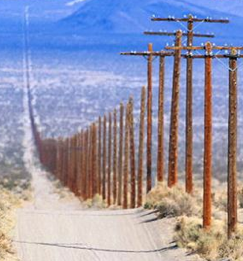
Many times in the past when I've been out running and have ended up on a two-lane road without much traffic, I've often counted the telephone poles along the way to mark both the time and the distance covered.
Similarly, whenever I’ve run a long race like a marathon, I’ve found that it helps me mentally to adjust the way I think of the miles ahead so that the numbers stay small from the halfway point on. For example, at the 15-mile mark, I say to myself, “I only have 11 miles to go” instead of saying “I’ve already run 15 miles.” Again, it’s a mental game as much as it is a physical challenge, and it often comes down to perspective. I'm sure I learned that trick from my dad on one of our many runs together when I was growing up, and I've realized its value many times over the years.
Another thing at which my dad excelled (besides running) was calculating things in his head, "running the numbers" as I've heard it called. I'm pretty sure he developed that skill in the distant past by thinking about time/speed/distance while he was out on long runs. For as long as I can remember, he could work out in a matter of seconds just how fast each part of a race needed to be run in order for the finish-time goal to be achieved. Doing "mental math" was definitely a strong suit for him, and, at some point, this ability became a talent that furthered his career in addition to making him a better athlete and a valued coach.
Lately I've been thinking about how much I wish I could know when the pain of the grief I've been experiencing since my dad's death will lessen; I wish I could mark the time or distance covered or have some way to count down how much further I have to go before it gets any better. I wish I could do the "mental math" so I could know when I will be able to celebrate my dad more and mourn him less, but I'm just not sure how to get to that point.
As stabilizing as it was to have my dad in my life, it seems like his death has had the opposite effect on me. I've never before had to work to have a glass-half-full perspective, but that's what has resulted from this loss. Through all of the emotions of this grief, though, I've not lost sight of the fact that if not for the strength and the perspective and the inner joy given to me by my dad, I might not stand a chance at coming out on the other side intact. Before Dad went on ahead, when people who knew me met my parents for the first time, I felt like they got a good look at whom I was and how I got to where I was. Now, though, with half of the equation not on site, I feel like it's much harder to know who I am, even knowing the stories that I can tell of my dad, maybe even for me: it's like an identity-crisis of sorts, but not one that can be solved by changing careers or buying a sports car. It's a point of no return that is resulting in me becoming a changed person, albeit not per my choice. Before I was this up-close to it, I never saw grief as this complicated or this powerfully altering.
For me, the first year after my dad's death was full of tears, shock, anger, disbelief, confusion, and more tears. There was lots of auto-piloting, lots of just getting through it, and lots of telling myself that the next day would be better, even though I wasn't always sure that it would seem that way. In many ways and for many reasons, I am finding this second year to be even more challenging. The trauma isn't over: the further out we get from the last time my dad was here on earth with me and the longer I have had to go without him, the more I miss him, but the less I feel that other people understand and feel like tolerating my grief. It's so troubling the way this grief often feels so indulgent and how it feels so - for lack of a better word - mopey much of the time to think about or talk about him, even though he is so frequently still on my mind. It feels abnormal to still be this sad, this angry, and to still feel as shocked as I do when the realization hits me again and again that he's gone.
"For some people, the second year after a major loss is even more profoundly painful than the first. The reason for this is that the fog and blur of the first year has started to lift. Deep and intense pain reveals itself. Do not be afraid if this happens. Continue to ride the waves of grief, breathing into it, and letting the process unfold as it needs to." ~Ashley David Bush, in Transcending Loss: Understanding the Lifelong Impact of Grief and How to Make It Meaningful
When I think about how long I’ve been without my dad, I wish I could count backwards as I moved ahead towards something that would matter; I wish I could think of some mind-game or strategy that would somehow help me feel better. When I think about how long this loss will hurt this badly, I wish I could predict. Being about to count backwards would allow me to focus on a goal, to breathe through the pain like Lamaze breathing during childbirth. But that's not what we have in grief, and perhaps that's the toughest part of all.
When I think about grief and those five stages everyone talks about, I'm just not sure where I am in all that. They all seem so swirled together. I can't really check off any of them on the list, not even denial (the "first" one!). I recently read about another model of grief - J. William Worden's Four Tasks of Grief - in hopes that there'd be something there about which I could say "Been there, done that." He says there are four tasks (or "Things To Do") in the grief process:
Task 1: Accept the reality of the loss. - This sounds a lot like Kubler-Ross's model, except that Worden says that "healing" begins with acceptance instead of listing acceptance at the end of the stages in the process. He suggests this can be done through funeral and/or memorial rituals like viewing the body or tending to the grave.
As I've mentioned, I don't think the term healing can be applied to grieving the loss of a loved one. Like the cancer that my dad had, there is no cure for grief. Perhaps "mitigating" is a better term for what we should hope for in this process.
Task 2: Process your grief and pain. -Worden points out that there are lots of different ways of doing this. He suggests that it is ok to process grief through action instead of just by thought, if the action is productive in moving through one's grief instead of serving to avoid it.
I'm not sure if I can put a check-mark beside this one or not ...
Task 3: Adjust to the world without your loved one in it. - Again, this can be done in different ways by different people. Worden gives examples of meeting this challenge by doing things like celebrating holidays or getting through important events despite the fact that our loved one isn't able to be there with us.
My family and I have done some of this, like taking family vacations since Dad went on ahead, but I will admit that there are some things that I still haven't "adjusted," like taking his cell phone number out of my list of Contacts on my phone. (Maybe I can get partial credit on this one ...)
Task 4: Find a way to maintain a connection to the person who died while embarking on your own life.
Again, I think this can vary from person to person, even within the same family. Some people like to talk about the loved one they've lost; others don't. Some (like me) find it comforting to write. Some may participate in things like volunteer work in honor of their loved one. Whatever the path we choose, though, I think we'll know it's right for us personally if it helps us to feel better (connected), even if just a little bit. I think I get credit for this one; I just hope it's helping me also to moveforward (not "on" - I hate thinking about "moving on" without my dad!). Sometimes I think writing about my dad and grief is adding to the stagnancy of my grief, but then a few days go by and I can't quiet the calling to jot down my thoughts about what's going on in my head or in my heart.
I'm still not sure what the grief process is really about - maybe learning how to still have a connection to my dad, maybe it's convincing myself that I can go on without the ongoing support of one of the people who made me who I am, maybe it's accepting that I have no control but yet I still have to live the best life that I can to honor my dad and others I love.