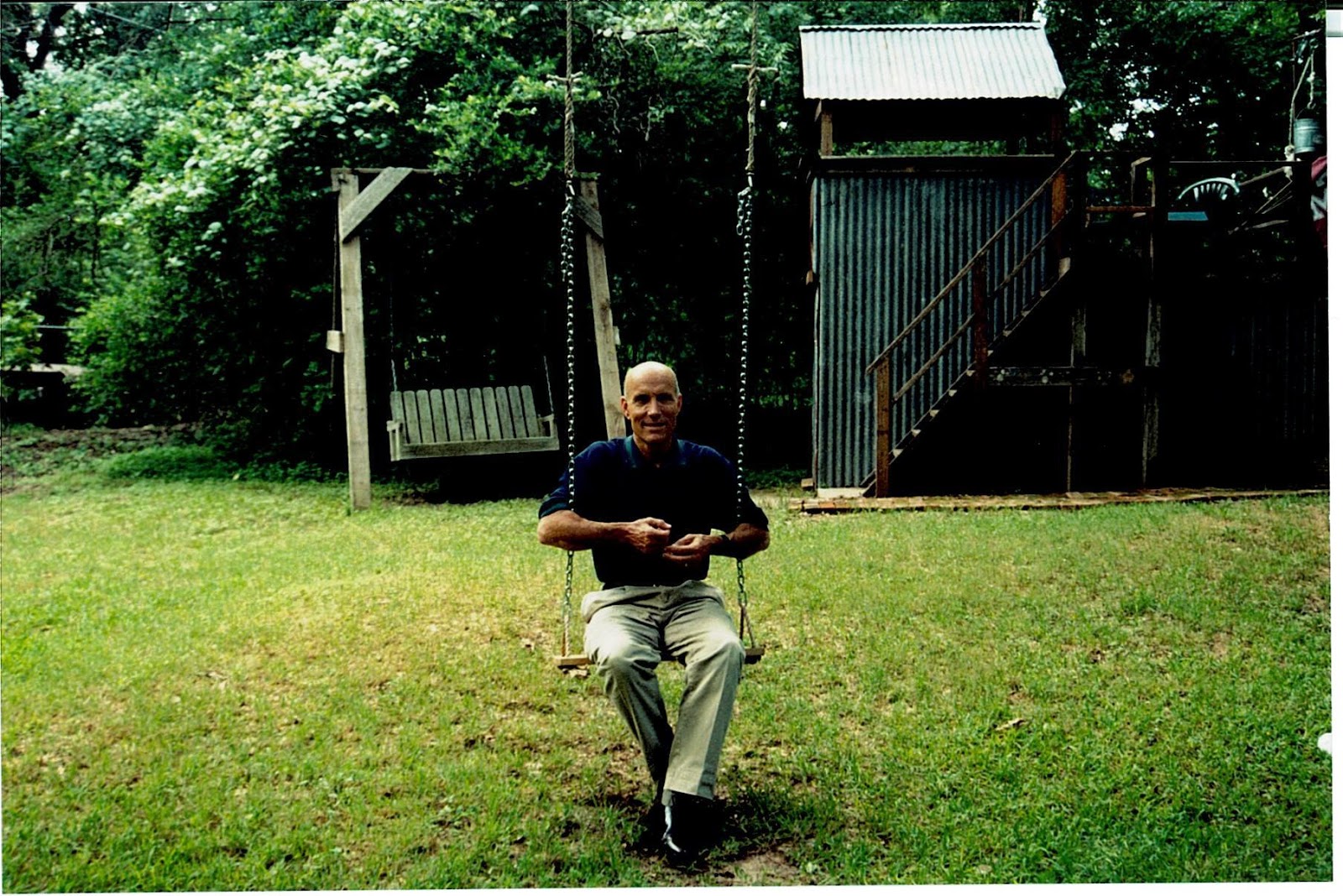
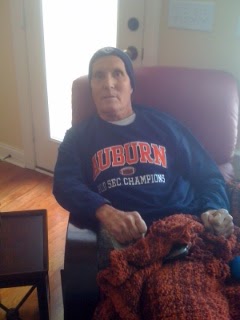
This story seeks to increase awareness and understanding of the unique needs of individuals diagnosed with life-changing illness or injury and their families by providing insight into the life of a man as he went through diagnosis and treatment of brain cancer (Glioblastoma Multiforme - or GBM).
Life, for the most part, is full of the mundane, the predictable, the obvious, the day-in/day-out routine. We get up each morning, get dressed, eat breakfast, go to work or school, run
errands, take care of the kids, make dinner, clean up, and go to bed. Repeat. It is easy to become complacent, to take it for granted, and even to sometimes complain about the little things without realizing what a blessing thingsaround us really are.
And then, in the blink of an eye, everything
changes. We are jolted out of our reverie, forced to refocus and to reevaluate pretty much everything.And even as much as we might
wish that things would go back to the way they were, things are changed.We are changed.And, for better or for worse, so is our
perspective.
In a way, the holiday season was part of the
repeating loop for me over the years.Certainly the joy and the excitement were
there, especially seeing the wonder and the happiness in the faces of the children in
the family.Looking back from this
vantage point, though, I can see that I spent too much time worrying leading up to and during the holiday season each year.I worried about when and how the Christmas
decorations got put up, I worried about having the “perfect” gift for everyone
on my list, I worried about what I would prepare for holiday get-togethers, I worried about getting a photo for the annual Christmas card and getting the cards addressed and mailed out in a timely manner, and
I worried about making sure that my kids had an action-packed, memorable
(at least what I thought was memorable at the time) holiday season.A lot of the stress I felt during the season
was admittedly self-inflicted.And, as I
see it now, a lot of it was unnecessary and unproductive.
As I got out the Christmas decorations this year,
I thought about years past when I did the same thing and I thought about when my dad was sick. The hustle and bustle was still present that year - it was just focused on a different set of priorities. My kids did
most of the decorating at my house that year; I was out of town helping to care for my dad
a good bit during that the time.I did 100% of my
Christmas shopping online, much of it late at night in between conversations
with Dad.Some of the gifts did not get
wrapped, and a few even got left behind in the transport between my house and my parents’ house, where my extended family gathered on Christmas Eve and Christmas Day, taking
shifts being with Dad who was in the hospital in the ICU at that point.
I will never forget how awful it was being in the
hospital that Christmas. The hospital
cafeteria closed after lunch on Christmas Eve, and families of patients in the hospital had to fend for themselves for food for the next day and a half
after that. The roads were icy and travel was precarious, and
everyone in my family was so, so sleep deprived and concerned about Dad and about each other. None of us cared about opening gifts or celebrating; the only thing we really wanted to do was to spend time together
and to do whatever we could to try to help Dad.
I thought about that a lot as I lifted each string of lights and each
ornament out of the boxes again this year, and here’s what I realized: As tough as
things were that Christmas, not for one second did any of us lose sight of the value
of being there together. No one in the family ever said anything like this isn't fair or I'd rather be somewhere else or doing something else. Together we
struggled through my dad’s illness and death and together we have struggled through the grief since then, the day-to-day routines as well as the holidays that have come since then now colored in a very different way. The lessons
I learned from all that we went through that holiday season are things that
I am certain will never leave me – things like how it’s more important to focus
on the joy and togetherness of today than to worry about the details of
tomorrow, especially when much of tomorrow is out of our control. Like how it’s important to ask for help when
help is needed and how stuff is just stuff. Like how when one of us is sad or exhausted or discouraged or sick or hurt,
we are strong as a whole. And like how, even in
the midst of the everyday, it's possible for perspective to reflect the riches that we are
fortunate enough to hold in the moment.
Since the moment my dad went on ahead, I've noticed a pattern of paradoxes that has emerged: as he took his last breath, I was simultaneously glad he wasn't suffering anymore but so sad for so many other reasons. I was grateful to have had him in my life for as long as I did, but I felt (and still feel) angry, resentful, and desolate about the fact that I didn't have more time with him. And after spending time helping to care for him around the clock during the ten weeks he was sick, with his passing I suddenly felt restless and fidgety - but at the same time I felt wearier than I had ever felt in my life, with the dull ache of grief settling into my bones from the first day I had to spend without him.
Over the course of the past 22 months since my dad died, I've gotten better at some things and worse at others. The dichotomies of these changes in me have been very unexpected, unfamiliar, and sometimes even unexplainable; all of them, however, came as a result of the impact of loss and have caused me to have to reorganize my thinking and my patterns of actions in many ways.
When my dad got sick and throughout the duration of his illness, I felt like I had been forced to take off my rose-colored glasses; from that point on, I couldn't avoid thinking that Karma was essentially bullshit and that there's no such thing as justice. That was nothing, though, compared to the thoughts that came after his death; at that point, those same glasses were shattered, in pieces, smashed on the ground. I know now that there's not much - if any - control to be had over bad things happening to anyone, including me, at any time. I guess I always thought that real insurance (and assurance) came from the kind of cause-and-effect relationship that I believed in before my dad got sick: if you live a good life, both in terms of being kind and giving and in taking good care of yourself, then you will live for a long time.How can one NOT see the logic behind that? But, as I came to see, that is absolutely not true.
The realization of such randomness has effected two contrasting feelings in me - a sense of fearlessness, because, really, carefulness doesn't matter, and also a sense of terror, because, really, carefulness doesn't matter. I don't know if that even makes sense - but I do know that the fluctuation between those two things can be exhausting and confusing, and I haven't yet been able to figure out how to reason away either of them. I can see myself walking on a tightrope suspended high over the ground - and I can picture myself cowering in the corner. Both with blaring vulnerability, and not at all the way I want to be.
Since my dad's diagnosis, I've done a lot of reading about cancer. Every time I read something or hear something about risk factors and early warning signs, I feel a knot in my gut. I want to yell a warning of my own to people who may also be reading the same information: Nothing is for sure. No one is safe. You can try to live clean, you can do all the right things, you can deprive yourself, you can avoid risks, you can live on a deserted island with no radiation, no cell phones, no microwaves, and you can eat whatever kind of diet you think is best, but YOU ARE STILL NOT SAFE. And so there is the anger - and the fear that fuels it. For like C.S. Lewis wrote, "No one ever told me that grief felt so like fear."
And it does; it really does. Fear brings out so many things that I just don't believe were present in me before this tragedy - fear that there is something lurking, fear that I have no control over anything, fear that I am messing something up along the way that cannot be taken back, fear that time may be limited for me or for someone else I love, fear that I may go off into the deep end, fear that I am too indentured in grief and loss to do what I am supposed to be doing, physically and philosophically.
One thing that continues to shock me about grief is how draining it is, both physically and emotionally, even this far out. It's such an assault to the system on so many levels. But, with as tired as I feel most of the time now, here's another irony: I often can't sleep. Many nights a memory involving my dad plays over and over in my mind. Sometimes that thought is a happy one; other times it isn't. Regardless, though, and even when I'm not thinking about him, the insomnia seems to have set up camp on a permanent basis, further adding to my weariness. That tiredness affects my health, as expected, and also, I'm sure, my attention span and my short-term memory, which haven't been at their best either for quite some time.
The way things are now, I have to work to see the magic in things much of the time. It's still there; at least I am aware of that - it's just that I have to remind myself of it, and I know I am at risk for not seeing it as I used to do so easily.
Sometimes all I want to do is to be by myself, to regroup or to cry or at times just to keep from spreading my sadness any more than I have to. At other times, though, I can hardly stand to be alone; I recognize that I need to be around people, especially those who care about me and - even better - those who know what's going on with me and those who try to understand.
I am, I think, much better at being supportive to others in difficult situations and more empathetic or, in some cases, sympathetic towards others these days. Don't get me wrong: I cared when I heard about people going through hard times before my dad got sick; I just didn't GET IT on the level that I do now. I now realize that it's a blessing to me to be in a position to help someone else who needs support, and I think I'm more in tune with what to say or do in certain situations because of my own experiences over the past couple of years.
At the same time,though, I am less tolerant of what I have come to see as drivel and drama. I have a hard time nodding in complacent agreement when I hear someone say they just had the worst day of their lives – really? Did you hear that someone you love has a death sentence coming down the pipe? Did you watch a loved one die? Did you bury a family member today? Then your day wasn’t all that bad. OR – when people say “I almost died!” when they’re talking in superlatives like “I was so shocked” or “It was so hot” – really? From listening to complaining to watching someone make a big deal out of what is essentially nothing, I guess I am just more intolerant of certain things these days, which admittedly isn't fair of me, considering I certainly need more than my fair share of tolerance and understanding from those around me much of the time.
I read several blogs written by fellow grievers, each with their own set of circumstances, story, and timeline, and each with lessons for me along the way. One thing I am more aware of now is that constant talk about sadness and anger and unfairness aren't necessarily the most pleasant to read, and more to the point aren't the most productive. I think we as a society see something that is broken, and we try to fix it; when we are sick, we do what it takes to get well. And I think as such our tendency is to want to hurry up and heal or to get over our grief as quickly as we can, but I'm not sure that's the right thing to do. Most people who are actively grieving seem to be doing it in private for the most part, and maybe that's not the right idea either.
And so then there's the guilt, and the shame, and the secrecy of the sadness of it all, which is a point of sadness within itself. I realize this may seem a bit sensationalized, or repetitive, or self-centered, as if I think I am the only person who has ever suffered a loss. I don't mean for it to be like that - I guess I am just searching for some kind of answers, and, oddly I know, I also realize that those answers really don't exist. There is no pattern to grief; there is no to-do list that will ease the pain of the loss. It truly is what it is, because, as Dad would say, what else would it be?
Some of the changes I think are positive though ... I am much more observant of the Silver Linings in my life; I don't go a day without recognizing how lucky I am, even on my worst days of grieving.
I take more pictures.
I appreciate the positive in my life - and the people, even more than I did before.
I write more - because it helps me to sort out my feelings, and because one of the things that hurts the most about having lost my dad is realizing that some of his stories are gone, too, and I want to try to save as many of those as I can.
If you knew that you probably wouldn't be here next week, next month, or next year, would you do things differently?
Would you slow down and spend more time talking and just hanging out with the ones you love, would you rush around trying to pack in everything you could into the time you had left, or would you jet off to some remote location and sip cool drinks on a sunny beach somewhere? Would you leave your work behind, choosing to treat each day as a vacation, or would you double-time it in an effort to finish what you'd started, in hopes of clearing your desk?
I think sometimes people go through life just trying to get through the daily grind, setting a goal each day just to make it to 5:00 and hoping to build up enough vacation days to take some time off a few times a year. It's a easy pattern to get into, for sure. That wasn't my dad at all, though. He regularly set goals for lots of things. He liked quotes that inspired action, like "A goal without a plan is just a wish" and "To accomplish great things, we must not only act, but also dream; not only plan, but also believe" and of course his favorite, "JUST DO IT!" In essence, he was a roller-coaster guy, not a merry-go-round guy:
"I like the roller coaster; you get more out of it!"
Through my dad, I learned while growing up to believe that anything was possible through hard work and perseverance. And, for the most part, I feel like that held true in my life, up until the time he got sick.
But I have to say that, had he known his days were numbered before that awful day two years ago this month when he was taken to the hospital by ambulance and the trial of our lives began, I don't believe he would have done many things differently.
For all the questions and the if-then deliberations in my mind from over the last few months of Dad's life, there is one thing of which I am absolutely certain: if life is measured by adventure, my dad had a full one.
Throughout his life, my dad identified things in himself that he wanted to change and then he made those changes. In fact, thinking back to one of those things from when I was a teenager makes me smile even today:
About the time I turned 15, my dad told me that he had read somewhere that research had shown that a teenaged girl whose father told her at least once a day that he loved her was much more likely to graduate in the top of her class and to be happy long-term in life. He said he knew that my sisters and I knew that he loved us but that he wasn't sure of exactly how often he told us out loud that he did, and so, just in case (another favorite expression of his), he was going to set a goal to say it to us every day at least until the time we graduated from high school. ("I'll still say it to you after that, but you'll be away at college so it may not be quite as often," he said to further explain his plan.) He didn't go into detail as to how he was going to be sure that he remembered to say it, but I knew him well enough to know that he would have some sort of system. And sure enough, the next time I got into his car, I saw what it was: he had placed a sticky note on the dashboard of his car, and on it he had written "Tell the girls I love them." Apparently the system worked, because, as far as I can remember, he told us that every day until we left home and every time he talked to us after that.
The last email I ever got from my dad was about planning for new adventures as he looked ahead to what he was going to do after he had completed the Ironman triathlon in which he was scheduled to compete but didn't get to. Here's what he wrote in his typical stream-of-consciousness type of email:
This will probably jinks it, but my foot is much better. I have 4 training wks to go--- Plan is to do three long runs (app3 hrs), 3 long bikes (80-100 miles and three long swims of about 2 miles each. In between stuff doesn’t matter much, I am told. If I can do these I should be fine, although walking will be part of the Plan which it is for most anyone not really competing. Nice to do around 14 hrs but just to finish is okay. Need to find a tattoo place in Calif to get Ironman logo on my calf. Lee gets one next yrr
Love ur crazy//Dad
told mom this would be the only one. Got to think of a new adventure—but no heights or extreme cold.
Thinking about the way that my dad lived his life, I see clearly that he didn't need a terminal prognosis to define his priorities or his goals. He never sat it out, he always gave it his all, and he enjoyed every day of his life. And if adversity is the test by which character is revealed, then I'm proud to say that my dad passed the test with flying colors.
It’s been one year today since my dad went on ahead. I still can’t fully grasp that he was sick or that he is gone. I wonder if the other people who were involved a year ago remember things differently from how they play out in my memory. Maybe my eyes weren’t wide open, likely my memories aren’t all 100%, almost surely my perspective is just my view through a viewfinder.
But here we are, one year later. I know that living through this experience has changed each of us individually and changed us as a group. And while we now bear a sadness that will never completely go away, we carry a strength and certain knowledge that shape our lives and influence everything we do.
One thing I am sure that everyone connected to my family’s tragedy would agree on is that what happened was shocking and awful. We are surviving only through the closeness, connection, learning, insights, love, and support that we have had and continue to have. And, despite the time that has gone by and perhaps even because of it, I am still deeply engaged in the grief process right now. Even through the fog of that grief, though, I feel a lot of love and appreciation, both for my dad’s life and all he taught me and for the experience of being with him during my whole life and through his sickness and his death. What I’m trying to figure out how to do now is to be happy without him physically being present, to think messages to him instead of telling him directly, to see something beautiful like a perfect sunset and not fall apart because he can’t see it, to experience joy in things and to keep my heart from breaking over and over because he can’t be here to celebrate with us, to go to sleep without crying, to remember without falling apart.
Shakespeare said, “Sorrow ends not when it seemeth done.” How very true! The persistence of grief and its changing nature have been very surprising to me. I’ve heard it said that grief is a measure of one’s love, and from my perspective that appears to be true: we may shed a tear or feel sad when someone whom we didn’t really know or love dies, but that’s not really grief, at least not the same kind we experience when someone whom we love and who is part of the foundation of the person we are dies. That kind brings us to our knees, causes a burning pain in our hearts that does not diminish over time, and colors everything we do and think and say. It sounds like a symphony playing with one instrument that’s really out of tune, and it changes who we are.
One of my sisters told me that she recently read that comingto terms with a loved one's death is like ramming a log into a door. Eventually it will get through, but, until then, it's noisy, exhausting, frustrating, and painful at times. She said that looking at grief in that way gives her hope that one day what we will feel is gratefulness for having had Dad for as many years as we did, happiness when we remember him, and a sense of pride at how we rallied and came together to take care of him when he needed us. But for now, the grief is still so thick and ever-present, and perspective is something for which we struggle on a daily basis.
Besides missing my dad and feeling the pain of his absence to my very core, something that gets to me now is the pressure to have moved on, to have gotten over it, to have “healed” (a word I hate in this context). I’m not going to go back to “normal” - I will never be the person I was before my dad got sick. I can't stand it when someone dies and people keep saying, “Be strong!” or "Hang in there!" to the family. Really? Why is that what’s being recommended? (And what other options are there, really?) While I, of course, recognize and appreciate the kind intentions behind remarks like these, all of these platitudes only serve to fuel my anger at the injustice, the ridiculousness, and the absurdity of a very healthy person like my dad getting sick and never getting better.
So here I am, one year later. The loss feels different now, and the same. And so do I. I know that I am still my dad’s daughter and that all he taught me is right here with me, as he is in spirit, but I am undeniably changed.
The last day of 2011. Looking backward, looking forward: isn’t that what we all do on New Year’s Eve?
New Year’s Day is typically a day of new beginnings, of looking forward to things that will change and to which we must adjust whether we want to or not.
For me, looking backward pulls in a memory of this day last year, the day we brought my dad home from the hospital on hospice.That was the new beginning for my family, but it was also an ending for us, an in-your-face reminder that life and death are not tidy or predictable, despite the best laid plans, logic, or effort.Obviously, there are lessons of life, love, grief, and much more that came from the journey my family took, many of which we are still in the midst, a shifting of roles, of perspective, a making of history that we did not see coming and that we were not sure we could withstand.
But withstand it we did, together, and we will continue to struggle through it as the process of adjusting and grieving continues. When we brought Dad home, I knew I wouldn’t ever be able to have life as it was before, and yet I had no idea how it would be going forward. This day as I remember it last year was the most physically and emotionally draining day I’d ever experienced. It was the first day that I felt it was acceptable not to have a specific plan. Maybe that was the exhaustion talking, maybe it was the beginning of some kind of acceptance, a stage of grief with which I am still struggling.
Resolutions? I’m not sure it matters. I guess it’s good to have a goal, but I have learned first-hand that what is going to happen, happens, regardless of the Plan. Out of respect for my dad and for my family, in the upcoming year I will try to be even more grateful, more aware of the beauty and of the momentousness of not only the big moments but also of the little ones, more generous, and (this one’s for you, Dad) always to err on the side of kindness. To have, as my friend Susan quoted from the bumper sticker she saw recently, wag more, bark less!
In a way, it saddens me to see 2011 come to a close; it marks too much time since I’ve last heard my dad’s voice or held his hand. A year ago, I could not have anticipated what would unfold during this calendar year. A year ago, I could not have predicted the range of emotions and the power of the grief that I would encounter. A year ago, I was just trying to get through to the next hour, the next day, with my dad.
During the 75 days that Dad was sick, there were parts of him that were still the same from our pre-cancer days, but other things were very changed. The help that he needed was all-encompassing, exhausting, stressful, sad, and draining, but so worthwhile; the only time while he was sick that I felt like I wasn’t free-falling was when I was right by his side. His needs and what felt like the constant activity and vigilance that were necessary were very effective at counteracting our own panic and the sadness and, truth be told, in a weird way, the reality of it all. When I was with Dad, I couldn’t worry about Christmas shopping or paying bills or much of anything else; it took 100% of my focus just to meet his needs. When there were two or more of us there with him, one person was able to be right with him, and the other person could get a little sleep, make something in the kitchen, sort the medications, make phone calls about Dad’s care, do laundry, or work on setting up something else for Dad like the ever-changing therapy schedule, a doctor’s appointment, or the rare outing in the community.
On a daily basis, Dad was battling almost constant headaches, overwhelming fatigue, loss of appetite (he said, “I’m ZERO hungry!” whenever food was offered), and a pervasive feeling of being cold (he frequently asked if the heater was broken or if someone had turned down the thermostat, even though it was set on at least 75 degrees). In typical form, though, Dad mustered his strength and pushed on, as did we.
On the Sunday before the MRI and Round 3 were scheduled, my sister arrived at my parents’ house from California. Dad had been talking about wanting to go to see a movie for a while, and so my sister and Mom called the movie theater nearby and spoke to the manager about the accessibility of the restrooms there. Like the trip to Duke, it wasn’t enough for Dad just to have access to a bathroom with a stall with grab bars; he needed constant cueing to use the walker and to guard against other obstacles like a wet floor and thus wasn’t safe unless someone could directly supervisehim at least in getting close to the toilet, from the toilet to the sink, and from the sink to the door to exit the restroom. As we had discovered on the way to North Carolina, most places don’t have single-stall type of facilities, and neither did the theater. When the situation was explained to the manager, though, he offered to supervise Dad on his trip into and out of the men’s room, and so the “Let’s Go To The Movies” Plan was put in motion.
Mom purchased tickets online to avoid a wait in the cold, and they loaded up into the car. In another example of a change in his usual personality and tendencies, though, when they pulled up in front of the theater, Dad announced that he didn’t really want to go. Concerned that he would regret his choice later, Mom and my sister tried their best to talk him into going in, but to no avail; thinking that it would lure him in, Mom even went into the theater and bought a tub of popcorn – Dad’s favorite thing about going to see a movie – and brought it back out to Dad in the car. Dad was insistent, though, and so the mission was scrubbed.
Once back at my parents’ house, the strain of the day’s events and the sadness of everything going on was evident in Dad; tears flowed as he told my sister and my mom that he didn’t think he would ever be able to do the things he wanted to do again. Like the workings of his memory and the sensation in his left arm that seemed to come and go and that we just couldn’t really predict or comprehend, Dad obviously had a lot going on emotionally. We were right there with him to support him, but he needed more. We felt like we were paddling against the tide, with no lifeguard in sight.
When my sister called to tell me about the afternoon, I put a call into the oncologist. I told him about Dad’s anxiety about the upcoming MRI scan, and he said that he would call in a prescription for an anti-anxiety medication to Walgreen’s.I asked again about an anti-depressant for Dad, and the doctor said we could discuss that at the upcoming appointment.I told him that we are all discouraged at the lack of progress. He said he had been wondering about that too and that he wasn’t sure if the Avastin needed longer to work in this case or if there was some brain damage from before or during the surgery that was either irreversible or just taking longer to heal regardless of the Avastin dosage. He said he was interested to see the results of the MRI scan, which we would go over at the appointment on Wednesday, and that he would speak to the team at Duke about the plan after that.
In the meantime, my sister had made contact with the neuropsychologist from the rehab facility, the tall runner-looking guy to whom Dad had responded so well before our trip to Duke, and the guy had agreed to work Dad in for an appointment right after the MRI scan on Tuesday. With the MRI at the hospital downtown, the appointment in another part of town, and then the candlelight service at a church near my parents’ house that evening, it would be a very full day, but we were hoping for a good result from all three.
Dad loved "The Sound of Music," and this song makes me think about how
we felt like we were climbing mountains, fording streams, and following
rainbows with all the love that we had, in search of a dream.
As we entered the second half of December, the tag-team effort continued, with one of my sisters or me staying with Mom and Dad almost every night so that Mom would have back-up support during the night and for as much during other times of the day as we could arrange. One thing that I’m not sure I have explained clearly in this blog is the amount of one-on-one assistance and supervision that was required during the time that Dad was sick. Physically, he needed help for everything, unless he was sitting in a chair or lying on the bed, and even then he wanted/needed to have things handed to him or arranged around him for safety and convenience. One example of this that we learned through trial and error was how to position food and/or drinks so that spills, which were so embarrassing and frustrating to Dad, were less likely to occur. Since he still had impaired sensation and strength on the left side of his body as well as visual-perceptual issues (he often didn’t notice things in the left side of his visual field), we had to place his provisions on the right. Drinks were served in non-breakable, lidded cups, and food was given to him on a non-breakable plate or in a plastic bowl. Dad didn’t seem to notice that we had rearranged the furniture so that the table that was previously on the left side of his recliner was now on the right side, and he didn’t say anything about how things were served or handed to him, which brings me to my next point …
For as many changes as there were in Dad physically, there were even more changes in him mentally. Like I've written about (here and here), brain cancer is distinct; it's different from other types of cancers because it most often immediately affects one’s cognitive abilities, which alters the way information is received, processed, expressed, and/or retained. And that, of course, influences very important things such as the person’s ability to fully understand the diagnosis, the prognosis, and treatment options, and this was absolutely true for Dad.
It also meant that Dad needed supervision 24 hours per day, something I’ve heard said in reference to plans of care for others who are very ill but with a different meaning in practice. In the vast majority of other situations when around-the-clock caretaking is called for, there is one blaring difference as opposed to our experience: the person who is ill sleeps - sometimes just at night, sometimes in a cyclical pattern for a few hours at a time, and sometimes even more than usual with lots of naps during the day after a decent night’s sleep - and understands that he/she should not get up and try to do things beyond their physical capabilities. That was not the case with my dad.Not only did he not sleep much, but it was not safe to leave the room or even to get in a short catnap oneself unless someone else was watching over him. He did not remember or realize that he couldn’t do the same things in the same way that he used to do, and he did not have the foresight or the patience to ask for help or to wait unless someone was right there with him to remind or cue him. Many times one of us would turn around to do something or go one room away for a minute only to find Dad trying to get up or, worse, already up either with or without his walker, a risk we were not willing to take. We felt it was our job to guard over him and to ward off whatever danger we could, and this included protecting him from himself.
As far as I could tell, Dad liked having my sisters and/or me there with him while he was sick, but he was very dependent on Mom; he wanted her to be right with him at all times and often got upset or anxious when she wasn’t able to be there. In a statement that tore out hearts out, he said that he thought that he might not be around much longer and that he didn't like it when she left because he was afraid he wouldn't be able to tell her goodbye if something happened. When he said things like that, it seemed like he did have a grasp on what was happening, but then he would say something about going to work the next day that brought the questions about his comprehension and memory back into play.
The changes that we DIDN’T see in Dad were the ones we had been assured would happen soon after the Avastin had been administered, but, besides the beginnings of improvements in sensation on some parts of his left arm, we were seeing ZERO of the good changes from the much-touted Magic Bullet.
The third week in December was set to be a busy one for my family: Dad had an MRI scheduled for that Tuesday and also wanted to go to a Healing Service at a church near my parents’ house that night. Round Three of chemo/Avastin was scheduled on that Wednesday. We had written these things down on the Dry Erase board along with notes about which of us would be there on which days and the therapy schedule, but it didn’t seem to help much at all. Time and details were not sticking in Dad’s short-term memory, yet I think he knew these things were important and so he frequently asked about what was on the agenda for the week, the day, and even the next hour. The questioning, the confusion, the anxiety, and the support that Dad needed were all just part of the whirlwind of activity that was going on around the clock at my parents’ house during this time.
I was hanging onto to Hope and whatever else I could for the time being, but I couldn't help but feel that we were in the middle of the storm before the storm. As one of my sisters said in an email about our situation at this point: “If Dad could think/process/remember the way other non-brain cancer people can, we could talk to him more about his Bucket List and how long to continue treatment and all those other so important things. I've been reading too many library books about terminal cancer and living life to the fullest, etc, etc. I hate to think that Dad knows -- somehow subconsciously or something -- more than we do. The MRI coming up is so freaking scary.”