Showing posts with label Kubler-Ross. Show all posts

Monday, August 27, 2012

Counting Backwards


                                    "Grief is a love story told backwards."


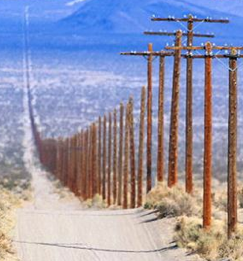
Many times in the past when I've been out running and have ended up on a two-lane road without much traffic, I've often counted the telephone poles along the way to mark both the time and the distance covered.  

Similarly, whenever I’ve run a long race like a marathon, I’ve found that it helps me mentally to adjust the way I think of the miles ahead so that the numbers stay small from the halfway point on.  For example, at the 15-mile mark, I say to myself, “I only have 11 miles to go” instead of saying “I’ve already run 15 miles.”  Again, it’s a mental game as much as it is a physical challenge, and it often comes down to perspective.  I'm sure I learned that trick from my dad on one of our many runs together when I was growing up, and I've realized its value many times over the years.


Another thing at which my dad excelled (besides running)  was calculating things in his head, "running the numbers" as I've heard it called.  I'm pretty sure he developed that skill in the distant past by thinking about time/speed/distance while he was out on long runs.  For as long as I can remember, he could work out in a matter of seconds just how fast each part of a race needed to be run in order for the finish-time goal to be achieved.  Doing "mental math" was definitely a strong suit for him, and, at some point, this ability became a talent that furthered his career in addition to making him a better athlete and a valued coach.  


Lately I've been thinking about how much I wish I could know when the pain of the grief I've been experiencing since my dad's death will lessen; I wish I could mark the time or distance covered or have some way to count down how much further I have to go before it gets any better.  I wish I could do the "mental math" so I could know when I will be able to celebrate my dad more and mourn him less, but I'm just not sure how to get to that point.

As stabilizing as it was to have my dad in my life, it seems like his death has had the opposite effect on me.  I've never before had to work to have a glass-half-full perspective, but that's what has resulted from this loss. Through all of the emotions of this grief, though, I've not lost sight of the fact that if not for the strength and the perspective and the inner joy given to me by my dad, I might not stand a chance at coming out on the other side intact. Before Dad went on ahead, when people who knew me met my parents for the first time, I felt like they got a good look at whom I was and how I got to where I was.  Now, though, with half of the equation not on site, I feel like it's much harder to know who I am, even knowing the stories that I can tell of my dad, maybe even for me: it's like an identity-crisis of sorts, but not one that can be solved by changing careers or buying a sports car. It's a point of no return that is resulting in me becoming a changed person, albeit not per my choice. Before I was this up-close to it, I never saw grief as this complicated or this powerfully altering


For me, the first year after my dad's death was full of tears, shock, anger, disbelief, confusion, and more tears.  There was lots of auto-piloting, lots of just getting through it, and lots of telling myself that the next day would be better, even though I wasn't always sure that it would seem that way.  In many ways and for many reasons, I am finding this second year to be even more challenging.  The trauma isn't over: the further out we get from the last time my dad was here on earth with me and the longer I have had to go without him, the more I miss him, but the less I feel that other people understand and feel like tolerating my grief.  It's so troubling the way this grief often feels so indulgent and how it feels so - for lack of a better word - mopey much of the time to think about or talk about him, even though he is so frequently still on my mind.  It feels abnormal to still be this sad, this angry, and to still feel as shocked as I do when the realization hits me again and again that he's gone.


"For some people, the second year after a major loss is even more profoundly painful than the first.  The reason for this is that the fog and blur of the first year has started to lift.  Deep and intense pain reveals itself.  Do not be afraid if this happens.  Continue to ride the waves of grief, breathing into it, and letting the process unfold as it needs to."  ~Ashley David Bush, in Transcending Loss: Understanding the Lifelong Impact of Grief and How to Make It Meaningful

When I think about how long I’ve been without my dad, I wish I could count backwards as I moved ahead towards something that would matter; I wish I could think of some mind-game or strategy that would somehow help me feel better.  When I think about how long this loss will hurt this badly, I wish I could predict.  Being about to count backwards would allow me to focus on a goal, to breathe through the pain like Lamaze breathing during childbirth.  But that's not what we have in grief, and perhaps that's the toughest part of all.

When I think about grief and those five stages everyone talks about, I'm just not sure where I am in all that.  They all seem so swirled together.  I can't really check off any of them on the list, not even denial (the "first" one!).  I recently read about another model of grief - J. William Worden's Four Tasks of Grief - in hopes that there'd be something there about which I could say "Been there, done that."  He says there are four tasks (or "Things To Do") in the grief process:

Task 1: Accept the reality of the loss. - This sounds a lot like Kubler-Ross's model, except that Worden says that "healing" begins with acceptance instead of listing acceptance at the end of the stages in the process.  He suggests this can be done through funeral and/or memorial rituals like viewing the body or tending to the grave.
As I've mentioned, I don't think the term healing can be applied to grieving the loss of a loved one.  Like the cancer that my dad had, there is no cure for grief.  Perhaps "mitigating" is a better term for what we should hope for in this process.

Task 2: Process your grief and pain.  -Worden points out that there are lots of different ways of doing this.  He suggests that it is ok to process grief through action instead of just by thought, if the action is productive in moving through one's grief instead of serving to avoid it.
I'm not sure if I can put a check-mark beside this one or not ...

Task 3: Adjust to the world without your loved one in it. - Again, this can be done in different ways by different people.  Worden gives examples of meeting this challenge by doing things like celebrating holidays or getting through important events despite the fact that our loved one isn't able to be there with us.
My family and I have done some of this, like taking family vacations since Dad went on ahead, but I will admit that there are some things that I still haven't "adjusted," like taking his cell phone number out of my list of Contacts on my phone.  (Maybe I can get partial credit on this one ...)

Task 4: Find a way to maintain a connection to the person who died while embarking on your own life.
Again, I think this can vary from person to person, even within the same family.  Some people like to talk about the loved one they've lost; others don't.  Some (like me) find it comforting to write.  Some may participate in things like volunteer work in honor of their loved one.  Whatever the path we choose, though, I think we'll know it's right for us personally if it helps us to feel better (connected), even if just a little bit.  I think I get credit for this one; I just hope it's helping me also to move forward (not "on" - I hate thinking about "moving on" without my dad!).  Sometimes I think writing about my dad and grief is adding to the stagnancy of my grief, but then a few days go by and I can't quiet the calling to jot down my thoughts about what's going on in my head or in my heart.


I'm still not sure what the grief process is really about - maybe learning how to still have a connection to my dad, maybe it's convincing myself that I can go on without the ongoing support of one of the people who made me who I am, maybe it's accepting that I have no control but yet I still have to live the best life that I can to honor my dad and others I love.  


Monday, September 12, 2011

Anger and Planting Flowers


Here’s what I’ve learned about the Anger that is so commonly part of the process of grieving: it’s not always logical and even logic doesn’t make it go away.

Even when part of my brain knows that what the other part is thinking is somewhat Crazy, I can’t help myself from being really pissed off about my dad’s illness and subsequent death.  Some of the Anger is based on confusion and the fact that I know there are no answers to many of the questions we have.  It’s based on the unfairness and the unjustness of what happened to my dad and to my family.  It comes from my devastation at how things went as well as my extreme disappointment in people who did not live up to my expectations, who didn’t help my siblings or my mom, who didn’t show respect or concern for my dad or my family as I felt they should have.  Maybe it’s unreasonable and maybe it’s illogical; I realize that definitely it’s my problem and my issue and my grief and Anger coming into play here. 

In Elisabeth Kubler-Ross’s final book, “On Grief and Grieving,” she says, “Anger surfaces once you are feeling safe enough to know that you will probably survive whatever comes.  At first, the fact that you lived through the loss is surprising to you.  Then more feelings hit, and anger is usually at the front of the line as feelings of sadness, panic, hurt, and loneliness also appear, stronger than ever.”  She talks about how in this stage the grieving person is often angry that he or she couldn’t stop what happened from happening, despite how badly that person wanted to be able to stop it.  She says, “The will to save a life is not the power to stop a death.”  How poignant, and how very true. 

I think a lot about both what is at the root of my anger and what the effects of that anger are.  I’m mad that I have to live in a world where I can’t talk to or see my dad. I’m angry on Dad’s behalf – it’s unfair that he didn't get to retire, to finish the Ironman, to feel proud of how he provided financially for my mom. He was only 67!  I expected to have him for at least another 20 years, and I am sure he expected to be around for at least that long too.

Kubler-Ross says, “Anger is a necessary stage for the healing process.  The more you truly feel it, the more it will begin to dissipate and the more you will heal.”  Well, if that’s true, I ought to be a regular freaking Red Cross Truck.

Some of my fury is directed at people who say they know how I feel (not just how it feels to lose a loved one, but how I in particular am feeling!), at those who committed to helping and didn't, or at those whom I think should have done something but who did not.  I am so very angry at the doctors for not figuring it out and even at those people who are unaffected and seem to be living as if this tragedy didn't occur. 

 On some level, I don't want to let go of the anger because I'm afraid that I will either plunge into depression and not come out or that I will transition through the last two stages of grief and be done with grieving and thus with remembering - and I need to remember, to be sure I keep Dad with me.

From this Anger, I can so easily spiral into thinking about things like What’s the point?  Why bother doing things like going to work each day?  Who cares about saving money?  Why make the bed?  WHY BOTHER PLANTING FLOWERS, if we don’t know what tomorrow will bring?  I know what Dad would say to this:  “Because you don’t know that tomorrow won’t go your way!”  And that’s true, but I’m still so incensed that I can hardly breathe sometimes.

At one point, I said that going through the experience of my dad’s illness and death and the subsequent grief is akin to being burned.  Upon further inspection, though, I’d say it feels much more like a traumatic amputation.  I may adjust to doing things differently.  I may one day be able to function and appear to be doing things just like I used to do them.  But, in reality, I will only be doing those things in an adapted fashion.  I will be forever changed and there will always be a part of me that’s missing. 

I am intolerant of some things and some people now; I just can’t listen to drivel.  If associating with someone brings drama, stress, or turmoil into my life, I cannot be that person’s friend for now.  That sounds so selfish, I know, and I hate to be like that.  But there’s only so much oxygen in this space, and grief and anger take most of it, and the rest goes to just doing what has to be done to get through the day.

I would guess that both surgeons and oncologists usually either get the benefit of deep gratitude or bear the brunt of profound anger in their line of work.  Either they fixed the problem, or they didn’t.  I GET that they can’t cure cancer (yet), but what I can’t seem to get past is the amount of Hope that was dished out by these people, at least for Dad to have gotten some function and quality of life back and for him to have some time (more than the ten weeks he had).  And the lack of follow-through and follow-up.  It seemed like a three-ring circus at certain points when Dad was so sick.  I honestly don’t know how some of the health care workers we dealt with look at themselves in the mirror everyday after what they did or didn’t do in my dad’s care.  A few of them just seemed to be putting their time in, working until the end of their shifts.  Some of the problems might have been due to inexperience with his exact type of cancer or even just plain inexperience, and some might have been from certain medical staff being overwhelmed with the workload, the amount of patients that come through the hospital and the doctor’s office on a daily basis.  BUT THAT IS NO EXCUSE!!

Dad’s anxiety and emotional health was completely skirted over by 99% of those involved in his care, for example.  One of the few really good nurses Dad had on the oncology floor at the hospital told us that she wanted to spend as much time with Dad as she could to learn more about his type of cancer.  She said, “We hardly ever see any GBM’s here, and we need to know what to do when we do see them.”  I admired and appreciated her honesty and directness as well as the extra attention she gave to us during the several shifts she was assigned to our case. 

I have heard that it’s almost universal for anyone who has suffered the loss of a loved one to wonder in retrospect about what else he or she could have done to protect, care for, and/or save that person.  Definitely I think about that on a daily basis, and here is one thing I can think of that I wish I had known to do:  find out the credentials and experience of every health care worker who comes into contact with your loved one.  Especially when his or her type of cancer/diagnosis is relatively rare.  Especially about the surgeons who are going to cut and the others who are going to prescribe and medicate the person who is sick.

Too late, I learned the following: “Of the 5,000 or so neurosurgeons working in the U.S. today, 4,900 concentrate mostly on the spine and deal on average with only five or six brain tumors a year. Of the 100 who routinely work inside the skull, perhaps 50 specialize in blood-vessel repairs rather than tumors. Only the remaining 50 can be considered brain-tumor specialists, averaging 100 surgeries annually.”

This information came from a Time Magazine article written about top neuro-oncologist Dr. Keith Black, who is one of a few neurosurgeons in the country who averages 250 brain tumor operations yearly.  I wish we could have gotten Dad to him.  Of course I don’t know if it would have made any difference at all, but I would have appreciated the option of a second opinion or any options at all. 

Wouldn’t you think a BRAIN SURGEON would be automatically obligated to tell the family of a patient with a brain tumor how much experience he has with such a delicate type of surgery?  Nope.  I’m not saying the surgeon that was assigned to Dad’s case was inexperienced or didn’t do a good job, but I am furious that we weren’t given a choice, or even a choice of having a choice.

We were directly told that the only option was for Dad to have surgery that week to biopsy and resect (try to remove) the tumor.  The neurosurgeon told us that Dad would regain at least some (and hopefully most or all) function after the surgery, but that never happened, and he never bothered to offer an explanation as to why it didn’t.

After the surgery, this neurosurgeon left us waiting for hours for an update after we knew the surgery had ended, and when he did show up to usher us into the Room of Doom, he laid the news on us that, yep, what he had suspected was true, Dad did indeed have the most deadly type of brain cancer and his prognosis was not good at all.  He told us that he had “managed to remove 80% of the tumor" and said the remaining part was “buried too deep in the brain.”  I remember so distinctly how he said “the” brain.  Not “his” or “your husband/dad’s” brain.  How awfully impersonal.  Like he was intentionally trying to stay detached and just couldn’t wait to get Dad the hell off his caseload.

At the time, we thought that 80% sounded pretty darn good – hey, almost all of it!  But, after I learned what I learned, it hit me full force that 80% in most books is a “C,” average, and not very good at all when it comes to the survival rate of aggressive brain cancer.  My dad was an “A” guy – he deserved at least 93% - why didn’t that guy TRY HARDER?  Did he have a freaking GOLF GAME to get to that afternoon?  At the end of his proclamation that terrible day, he offered us the name of a colleague of his, an oncologist whom he said was active in many clinical trials, and then stood there as if he were waiting on us to thank him. 

I loved the oncologist, for awhile.  He seemed aggressive enough, and he seemed to be a good listener.  But he was a very busy guy.  In the last few weeks of Dad’s illness, he couldn’t seem to return a phone call (he just had a nurse do it), and eventually it was evident that he was missing the Big Picture, even though it was like having an elephant in the room.  I had asked him on several occasions during the time Dad was sick if he would bring up the subject of hospice when the time came so that we would know when to say when, and he totally dropped the ball.  Maybe he was in his own type of Denial – he obviously expected Dad to get better with the treatment protocol he was on – but, from my perspective, it was HIS PRIMARY RESPONSIBILITY to provide whatever care Dad needed, and he did not do that.

We had to bring up the subject of Hospice with the oncologist, and, when we did, he said he wasn’t sure it was time and implied that he thought Dad just needed to get stronger and then the radiation could be started.  At the time, though, Dad couldn’t even turn his head in the bed or suck liquids through a straw.  The oncologist went home that night with the topic of hospice hanging in the balance.  When he came back early the next morning, he said he’d been thinking about about Dad all night, that he could see now that it was the right choice, and that Dad could still get better and if he did then we could revoke hospice and move forward with treatment.  The New Year’s weekend was coming up, and, like he did the weekend before for Christmas, the oncologist was going off duty from Friday morning until Monday morning for the holiday.  He solemnly told my mom that he would call the house and talk to her or one of my sisters or me after the weekend to check in and that he hoped so much that the news then would be that Dad had rallied.

All good, except that he never called.  Not that Monday, or the next day when Dad was declining so rapidly that the hospice nurse told us that we needed to get to his bedside and stay there, or the day after when Dad went on ahead.  Naively, I thought that Dad was a special patient to this guy, because Dad was so exceptional to everyone who knew him.  The realization that he wasn’t cuts me so deep and enrages me so completely that it comes close to making me lose faith in mankind all together.   Yeah, I’m pretty angry.

Through all of this Anger, though, this Fury that is thick like smoke, so thick that I can hardly SEE sometimes, I am trying.  I’m trying to remember that Anger is an emotion, one that needs to be expressed, not bottled up, and one that is from the heart and cannot be explained or wiped away with reasoning or will.  I’m trying to remember the generosity of those who did support us and who did care for Dad, like that nurse who helped us through one of the worst nights when Dad was so very sick in the hospital.  I’m trying to remember to feel lucky, and that, like Dad often said, ”It could have been worse!”  I’m trying to honor my dad and my whole family and put one foot in front of the other in spite of the burn of my Anger. I’m trying to be more like Dad, to be kind and forgiving even when someone may not deserve it.  I’m trying to believe that it’s not stupid to plant flowers.


To read the second entry on thoughts and comments on Anger, click here.

Wednesday, August 10, 2011

Bargaining

I heard a story once in which some children were playing ball when the ball accidentally got tossed over the fence into the next yard.  There was a young girl whom the other kids did not allow to play in their ball game because she had problems with her eyesight and with her balance, but she was happy enough just to have the job of going to retrieve the ball when needed.  Eager to play her part in the game when given the opportunity, she tediously climbed the fence and dropped down into the next yard.  Once there, she saw something in the shade underneath a big tree, and she called out “Here, Kitty!” to what she thought was a cat.  After getting no response, the girl picked up the ball, struggled back over the fence, and returned the ball to the other children.  The creature in the shade of the tree was actually a skunk, and, after the girl had climbed back over the fence, he sat there in silence, stunned by the friendly way she had called out to him, which was an extreme contrast to every other interaction he had ever had with a human.  He started thinking about how different his life would have been if he had been born different, if he were a cat or a dog instead of a skunk.  He even started to consider how great it would be if he were a young girl, even one with poor eyesight and coordination, but he couldn’t really go so far as to imagine that – it’s just too far-fetched of a fantasy to fathom.


Bargaining is one of the stages of Grief described in the writings of Elisabeth Kubler-Ross.  The word itself is technically defined as “negotiating the terms and conditions of a transaction;” I see it as an attempt to gain control, and I have learned over the past nine months that at times it can be a valuable tool in figuring out how to cope with changes, disappointment, and sorrow.

The bargaining that my family and I did while Dad was sick, as part of what I later learned was our anticipatory grief process, was in the form of acting like we didn’t mind or really even notice that he couldn’t do many of the things that he did before his diagnosis, including working, driving, exercising, and even basic things like getting ready for the day, talking to people on the phone, and getting himself something to eat or drink.

We also bargained by letting ourselves believe that if we got what we thought was the best treatment possible for him, managed his medications and his care, had him go to rehab, and set up my parents’ house just right, Dad would get better.  We thought that if we gave it our all, we would get something in return, and, like a child who prioritizes in the letter to Santa according to what gift he or she wants the most, what we really wanted to be given was better health, and a better quality of life, for Dad.

A little further down the road, we even bargained by saying that we’d feel so lucky if we could still have him with us and allow him to enjoy life for just a year or two more, although, since I secretly thought that that part was absolutely possible (probable?), I shot for the stars by hoping and believing that Dad had a chance, maybe even a good chance, at being in the very exclusive group of people who “overcame” brain cancer. 

Dad was always a very practical person; he felt like thinking about far-fetched things like winning the lottery was a big waste of time; "Crazy Talk," he called it, when people spent time discussing what he considered to be outrageous ideas.  But even he joined in on our Bargaining Efforts.  For several days after his initial trip to the hospital, he thought he might still be able to compete in the Ironman triathlon that was two weeks away.  He talked about how he didn’t think taking a few days off from his intensive training regiment would affect his ability to finish the race, even though at that point the sensation on the left side of his body was so impaired that he couldn’t stand up or hold a utensil to feed himself.  He was convinced that as soon as he could get out of the hospital he would be ready to go back to work, without missing a beat.  Several doctors and nurses tried to talk to him about the certainty that he would need to take at least 6 weeks off just to recover from brain surgery, even if no follow-up treatment was necessary and even if he had no symptoms or health problems after the surgery.  Each time, he listened to the person’s spiel, but as soon as he or she turned their back or left the room, he winked at us or stage-whispered “That’s what they think!” to be sure we knew he wasn’t going to follow that plan! 

A couple of days after his surgery, when he was told that he had brain cancer, he said he knew he would need to take time to recover and then he planned to restart his training program and get back to work before his sick days ran out.  He asked me to contact the race organizer for the Ironman and see if he could get a deferment, which is athlete-speak for getting permission to enter the race the following year instead of the current year.  In the meantime, he said, he planned to do some smaller triathlons and to continue his training efforts by running, biking, and/or swimming on a daily basis.  He told us that he would just work from his home office for a couple of weeks so as not to get too far behind on that either.

At one point while he was in the hospital, his neurologist said that Dad would not be allowed to drive until he had been seizure-free for at least six months, and he actually told us out of Dad’s earshot that Dad might never be allowed to get behind the wheel again.  “Whatever!” Dad said after the guy left the room.  “If everybody’s going to be doing all of this Crazy Talk about me not driving, I guess I will just get a ride to work and to wherever else I need to go.  Or maybe I will just ride my bike; that would be a good workout!”

After hearing Dad talk about his plan to ride his bike to get to wherever he needed to go once he got out of the hospital, Mom told him that we'd have to see how safe he would be on his bike.  Dad waited until he thought she couldn't hear him and stage-whispered, "I'll just get one of my son-in-laws to put my racing bike on the spinner in the garage and help me on it, and then she'll see that I can ride just fine!"


About that same time, the oncologist informed us that Dad would probably need to get radiation every day for about six weeks as part of his follow-up treatment.  Dad hated that idea because it seemed inefficient to him; he didn’t understand why they couldn’t just “go for it” and give him a higher dose of radiation to get it over with more quickly.  He had a steady stream of negotiation going about that part of his treatment; he felt like it was not “doable” for him to be going to and from the hospital daily for that long or even just to be restricted from leaving town for all that time.  “It’s like I’m grounded,” he sulked when the radiation oncologist told him he couldn’t travel during the six weeks of radiation that was being planned.  "Oh, well, I guess I can do anything for six weeks if it means I'll get better," he offered, as his part of the negotiation.

In the weeks after that, going through rehab, the trip to the Brain Tumor Clinic at Duke, and two rounds of chemo, he shifted gears again and again, eventually giving up on the idea of competing and just hoping to be able to work out for fun.  He told several doctors, nurses, and therapists that he no longer believed exercising and eating right could keep a person healthy: “Look at me;” he said.  “I’m living proof that you’ve got to run or whatever just for the fun of it because it won’t necessarily keep you from getting brain cancer or anything else.” 

While Dad was in rehab and even at the Brain Tumor Clinic, when I looked around the waiting rooms and treatment areas and saw people who weren’t as changed as Dad was, who weren’t as impaired as he was, or who hadn’t been given such a devastating diagnosis or prognosis, I was like the skunk in that story; I would have given almost anything to get just a little something more for Dad, more hope, more function, more time, more fun, more independence, more quality of life. I just wanted for Dad to feel ok and to be happy for even a little while longer.  After awhile, I didn’t even dream of the possibility of his ever being just like he had been anymore; it was too far-fetched and I felt like that would have been asking for far too much given our situation.  It would have been Crazy Talk!

Wednesday, June 1, 2011

The Grief Process


I've done a lot of reading about grief since my dad died in January and have learned a lot, but I am still trying to figure things out (if that’s even possible).  I’ve come across two “models of the grief process,” the first one being far more well-known:

The Kubler-Ross Model, commonly knows as The Five Stages of Grief.  I remember studying this is psychology classes in college and reading Kubler-Ross’s book On Death and Dying back then, before I had any kind of personal reference or experience.  I remember memorizing the stages and thinking I had an understanding of what each was like.  However, like lots of things I thought I knew back then, I was actually far from knowledgeable (and, despite what my family has been through over the past 7 months, I still am).

The stages of grief are generally described as steps that people go through as they cope with loss and tragedy.  Kubler-Ross said that the emotions identified in these stages are not complete or necessarily chronological; grieving often involves many other feelings that can surface or re-surface at any point in the process.  Some steps may be missed entirely by some people, and sometimes a person may get “stuck” in one of the stages for different reasons.  The five stages are as follow:

*Denial – usually a temporary defense but can be very useful at times because it gives the person time to process.  (I can't believe he died.  I keep thinking if I call his cell phone and leave him a message, he'll call me back.)

*Anger – Lots of questions surface during this stage, which may also involve rage and envy. (Lots of this for me is not based on reality, I know, but I'm still really pissed off!)

*Bargaining – The negotiation offers begin, sometimes for a longer life for oneself or for their loved one or even just a desire for something to hold onto, such as a dream or contact with the loved one who has passed away. (I recognize now that lots of bargaining took place before Dad died, mostly in the form of accepting the changes in him and his abilities without missing a beat, as long as we still had him around.)

*Depression – The understanding of the certainty of the loss begins to set in, which often results in feeling extreme sadness, crying, and disconnecting from others, which can serve to allow the person time to process.  (Yeah, I've got some of that going on, too.)

*Acceptance – The last of these stages during which the individual comes to terms with what is happening or has happened.  (Nope, not even close to being there yet, and in a way I don't ever WANT to get there because I'm afraid it will mean I am "getting over" what happened and forgetting him or things about him.)

The second model I’ve seen in the literature is the “Grief Spiral,” which involves many more stages and emotions, all of which are shown to overlap at times.  I like that this one is more visual and seems more descriptive.  It starts with the death/loss and then progresses through shock, numbness, disbelief, avoidance, confusion, anger, longing, searching, intense sadness, apathy, sadness, detachment, hope, less pain, more energy, and personal growth.  It ends with “New Life.”  The information that this model includes says that grief should be viewed as a healthy reaction to a loss and that it can even “set us on the road to healing.”  It reiterates the fact that each person’s grief is individualized and explains that the initial feelings are part of denial and bargaining, which help us to adjust to the loss at our own pace, as we can tolerate it.  It says emotions in the anger phase may be overwhelming as the significance of the loss is realized and the depression stage often causes the grieving person to want to withdraw, which can serve as a “time out” so that the healing can begin.  In the last part of the model, hope is said to return along with more positive feelings that eventually lead to a “new normal.”  (I hate the term "new normal!"  I want my "old normal" back!  I also hate the term "healing" when it is applied to grief.  I think people CHANGE as a result of loss instead of healing, and I don't think grief should be looked at like an injury or an illness that would necessitate healing.)

I’ve heard lots of metaphors used to describe the grief process.  I am a big fan of metaphors in general, and so some of these are helpful and/or interesting to me.  The two things I’ve heard grief compared with the most are a body of water like the ocean or a river and a roller coaster.  I've been told that after a period of time, emotions associated with grief and loss tend to be less intense with the pain being more spread out, much like waves breaking at the shore, rapids that are rough to cross but then lead to calmer waters, or the roller coaster ride that is rough in the beginning but easier as the ride goes on.  I hear people who are more experienced than I am say that even years after a loss a certain event or memory can trigger a flood of emotions again but that over time it is easier to focus on the good memories more than the pain.  I’ve heard that grief is like the ocean, with waves that are manageable one minute and knock you down the next but that eventually the waves get smaller and are spaced further apart.  (I also think grief is endless, like the ocean, and that it holds the potential for drowning, like water in general.)  I’ve heard it’s like navigating in a canoe down a river in that at times you are just being pulled along by the current but at other times you will have to face the rapids.  (And maybe even a waterfall or a huge boulder, fallen tree, or snake!)  I’ve heard that grief works like a magnifying glass in that someone’s “pre-loss” personality and habits become intensified under the stress of coping with loss.  I've read that a person usually copes with loss based on how he/she functioned before that loss.  I’ve also heard that grief blurs the lines (or filters) on one’s perspective and hardens one’s tolerance to many things, at least for a while, and I personally have found this to be true.

For me, grieving seems like building a house of cards.  As I go through my daily life five months after my dad went on ahead, most of the time I am stacking and balancing cards; however, at least once a day the cards get bumped over, resulting in partial destruction of my card house or even a total knock-down.  And then I rebuild again, even though I don't really feel like it and I don't have the energy for it most of the time.  It’s also like a tornado.  Maybe there is an eye of the storm that comes into play sometimes, but the rest of the time everything is swirling around, powerful and threatening and threatening to touch down.

I want to tell this story to be sure we recognize and remember it all, not just Dad’s illness or his dying, but his whole life, his presence, his impact, his personality, him before he got sick.  I’m afraid if I start writing I may not be able to stop, or worse – that I will, and then I will be done grieving/processing/remembering which is what I think is keeping him with me.  I don’t want to be a me without my dad.  I know I am not technically "without" him, but that doesn't help my heart from hurting from missing him.

When I read about grief, some of it helps me to think or to process what’s going on inside me, but some of it pisses me off.  “Embrace your grief” and “Grief is a journey.”  WHAT?? It’s more like being burned or beaten.  While I appreciate offers and gestures of support, I can't take advice from someone who doesn't have first-hand experience with losing a loved one, and even when that is the case it PISSES me off when others assume (or even SAY) they understand what I'm going through or that they know how I feel.  See?  I told you that anger stage is in full force.

When we honestly ask ourselves which person in our lives means the most us, we often find that it is those who, instead of giving much advice, solutions, or cures, have chosen rather to share our pain and touch our wounds with a gentle and tender hand. The friend who can be silent with us in a moment of despair or confusion, who can stay with us in an hour of grief and bereavement, who can tolerate not knowing, not curing, not healing and face with us the reality of our powerlessness, that is a friend who cares. ~ Henri Nouwen