This story seeks to increase awareness and understanding of the unique needs of individuals diagnosed with life-changing illness or injury and their families by providing insight into the life of a man as he went through diagnosis and treatment of brain cancer (Glioblastoma Multiforme - or GBM).
On this day
four years ago, I watched one of the best people I have known take his very last
breath.I held my dad’s hand, kissed
his cheek, and with tears rolling down my face told him I love him for the very last time.It was
a day at the end of a lot of days that I will never forget, and it was the
beginning of an endeavor of a difficulty level that I could not have imagined –
and one for which I could never have adequately prepared.
I’m not
sure if I knew it when I spoke the last words I would ever have the chance to
say to him, but I told my dad something that day that wasn’t the truth: I told
him that I would be ok without him.I
had to say it; I knew that I needed to let him go on ahead with as much peace
as I could offer him after all that he had been through.But, even four years later … I can’t honestly
say that I’m ok, at least not as I used to think of as ok.I’m different, in many ways, and I guess there
is some ok in that.The anguish of
missing him every day and of knowing that he wanted to stay here on this earth
with us so damn bad, along with the things that my family and I learned during
his illness have transformed me forever, for sure.
Grieving in
our culture is often very hard: people seem to expect – and to want – those who are
in mourning to be ok.Messages like “Be strong!” and “He would want you to be happy” are the
standard, and that is one of the things that makes grieving feel like swimming
upstream.
I remember talking
to a friend whose dad had died many years before not long after my dad
died. She was still really grieving, she
told me, and I was stunned. How conveniently
naïve I was, about grief and about a lot of things, before the lines were
blurred. Sometimes,
when I think about my dad’s going on ahead, about not having him with us here on this
earth anymore, my breath catches in my throat and I think, "I am not ready
for this."I know now that, like my
friend and like so many others who have walked this path, I will never be really
done grieving … and I think that’s the ok that I am left with.
An article ran today in the Huffington Post's Healthy Living section that may be of interest to anyone who is grieving or even who knows someone else who is suffering from grief: Griever's Gold: Cherished Memories The advice given in this piece is reiterative of some of what I've written about in this blog, especially the way the author launches into her list by saying, "The following five techniques can help a griever shift perspective." The insight about the way people who are grieving consistently indicate that they would not trade away memories of their loved one in exchange for having the pain of their loss erased is interesting, I think, a different kind of spin on the idea that, no matter how dire or tragic one's situation seems, it's always a wise perspective to realize that things could be worse. I also like the way she talks about shift and how it tends to occur in grief over time; it's really quite incredible that way comfort seeps into our lives to help (not to heal, I don't think) with the rawness of the pain thrust upon us when we lose a loved one.
The third item on the author's list, "Share stories with other people," reminds me of the quote that affected me so much when I saw it hanging on the wall of the grief counseling center where I went not long after my dad's death:
Every grief needs a thousand tellings.
Although this may not be true for everyone or in every situation, I have found the "telling" to be helpful in my own grief process. And finally, the fifth item, "Give thanks for the gift of this person in your life," which is my favorite on her list because it is totally dependent on one's perspective: instead of feeling only sorrow and anger for the loss of a loved one, one can choose to be grateful and happy for having had him to love at all - and to have experienced the impact of that person AND to have the honor of carrying him forward.
Every time I see this portrait of my dad standing in the redwood forest, I think of the word "IMPACT."
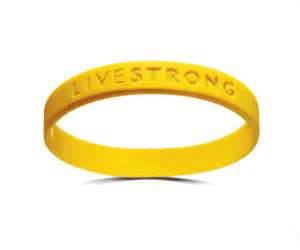
We've all heard the expression "Live Strong," especially in the context of fighting cancer.
Since my dad's diagnosis, though, I've come to view the meaning of this command in a different light, and I see now that it’s not just for the people who have been diagnosed with cancer, but also for those who are caring for them - and even beyond that to those who are left behind to grieve.
By all accounts, my dad "lived strong" during the ten weeks he was battling for his life against the brutal brain cancer that took first his independence and shortly thereafter his life. He literally fought with all his might until his very last breath.
I've heard it said that people die as they have lived, and, in regards to being courageous and strong, definitely that was true for my dad. And, as for my family, I think we've "lived strong" too, working as a team throughout his illness and since then.
In many ways, it's been the "since then" part of this whole thing that I've found to be much harder, but, to honor my dad and the rest of my family, "living strong" has been and continues to be my goal.
Sometimes I worry that I'm not being strong enough now, though.
When I was a teenager, I had a t-shirt that had big lettering at the top of it on the front that said "Trackster's Excuse Shirt." Underneath that were listed dozens of excuses that people often used not to run on any given day, things like, "I'm sore from yesterday's workout," "I think I'm coming down with a cold," "I had to work late," and even "It's too cold outside" and "It's too hot outside." I loved that shirt, and I wore it often. Dad and I used to make up additional excuses that we thought should also have been listed on the shirt and laugh; there were many days when I didn't especially feel like running but I did it anyway because the shirt helped me to realize that whatever excuse I had was just that - an excuse. I remember the day I got braces on my teeth; when Dad got home from work that afternoon after I'd gotten home from the orthodontist, he told me to get my running gear on, and I protested, claiming my teeth were too sore to run. "Oh, really?" Dad asked with a smile on his face. "Should we put that on the excuse shirt too?" Of course, I laughed and then suited up so we could head out the door to run as planned.
Lately I've been thinking that maybe I need a shirt like that, one that lists all the reasons excuses I so easily come up with these days for not running (or for anything else, for that matter): "I didn't sleep well last night;" "I miss my dad too much;" "I'm grieving;" "I'm too busy at work," etc.
There's no good reason, only endless excuses, and yet I still can't seem to find the drive to do it anymore. A few years ago my dad gave me a big magnet to put on the back of my car that says "Runner Girl." I took it off my car more than a year ago; it just felt so disingenuous, and seeing it every time I walked around to the back of my car made me sad. Sad that I wasn't running, sad that my dad couldn't be.
That's just one of the things that I used to do that I don't anymore, one of the changes that I don't know the reason behind and that I don't like. I'm honestly not sure if I should grit my teeth and try harder to live strong or if I should just look at it as a temporary thing that I have to go through and go with it for now; I know that some of this is just part of the process - and that some of it is out of my control.
From the time when I was about 12 years old, I always volunteered to pack the car the night before we went
on a family road trip. I liked being
the one who knew where everything we might need during the course of the trip was
in the car, from a deck of cards to snacks to a box of tissues and a map.
I think one of the hardest things about dealing with a terminal
diagnosis and the grief after the death of a loved one is having the realization that there is no control to be had and that there is no getting prepared for some things in life. In essence, there is no packing the car
the night before in Real Life.
In grief, you spend a lot of time focusing on, well, you. Grief tends to make us shut out other things at times, not out of self-centeredness but out of necessity. It is a rough road, one riddled with obstacles, but one with learning and growing and - with time and effort and luck instead of excuses - living strong, to the best of our ability. We just have to get through it, in our own way.
I recently signed up for an online class that looks at dealing with grief through writing. This week's assignment is to write about what we miss the most about the person for whom we are grieving. This is my entry, which is kind of a follow-up to the original What I Miss The Most post from last October ...
I guess the thing I miss the most about my dad is his enthusiasm. He was without a doubt the most gung-ho (he loved that term) person I've ever known, always motivated and always looking at the glass as half full, and his contagious energy was something that affected everyone in his presence. That ties into what I have come to realize was the best thing he left to those of us who were lucky enough to have known him: his perspective. During my life, I observed him so many times in the role of the life of the party, a great conversationalist, and a friend to so many; I always thought he was so popular because he was so much fun to be around. But after he went on ahead I realized from things that people (some of whom I didn't know even though they knew my dad) told us that it was actually his kindness and his positivity that attracted so many people to him, and I saw how far reaching his genuineness and his perspective truly were.
What I wear on my wrist every day to remind myself to try to be positive, just like my dad
I am trying hard to emulate that benevolence in my daily life these days, but, in the midst of my grief, I am finding it to be very hard to do so. I miss my dad and his zeal for life so much that it often makes me angry and/or sad; I know that's just part of the grief process, but it makes me feel like I am not honoring him or carrying on in his footsteps when I can't be as excited and cheerful as he always was.
I went to the funeral service of a dear friend today, probably the fourth one I've been to since my dad went on ahead, a tough thing to do for several reasons, one of which is that it turns my focus back to when we buried my dad.
Before my dad went on ahead, I remember feeling completely at a loss of what to say or do when I went to a funeral. "What can I possibly say that will make a difference at all?" I'd think, and, truth be told, there were a few occasions when a family member (whom I didn't know) of a friend of mine passed away and I didn't make an effort to go to the funeral. I told myself that my friend wouldn't miss my presence there, that I would be just one more person in a sea of people paying their condolences that day, and that it wasn't a big deal if I just waited to check in with my friend later. But since then my perspective has changed, and I've started thinking differently. I now know that it is important to make an effort to be there to support the people I care about who are grieving, even if it's hard and even if I am struggling still with my own grief. For all of my rambling over the past year and a half about what I didn't appreciate people saying to me in my own grief, the truth is that I STILL don't know what to say to another person who is bereaved. Here's my gut feeling, though: I think those whose loved one has gone on ahead need to hear that the person who died will live on in the memories of and in the hearts of others who knew him or her. I think it can be helpful for them to hear about what that person meant to others or even just to hear a story that that person has to share about their loved one. For me, one of the things that I have feared the most since my dad died is that time and the business of everyday life will swallow up the impact of my dad's presence for other people in the world, like he wasn't here or like his life didn't matter to anyone other than to those in my family. Maybe that is a common thing to fear in a situation of loss, and, if so, maybe reassurance in some form from those who also knew that person will in some way help those who are suffering from a loss.
From my own experience, I also learned that the significance of following-up with a friend who has lost a family member, checking in with them after a little bit of time has gone by, is so often overlooked, or at least it was in my family's case; I think it's something that most people just don't think about doing, or maybe they think about it but just get too busy with their own lives. I learned how touching little things are as we go through the process of the funeral are, everything from having someone bring extra Kleenexes to someone taking photos of some of the flowers to the strangers along the way to the cemetery who pull their cars over on the side of the road to let the procession go by. I learned that different families, different situations, and different religious practices result in different types of funerals, and that that's ok; certainly there's no right or wrong way to hold a memorial service or to grieve. The funeral today was at my friend's church; the service was very touching and was reflective of my friend's beliefs and her preference in music and verses. My dad's, though, was a different style altogether. Before he got sick, Dad had said many times that he didn't want a big service to be held in his memory after he died; he said it embarrassed him to even think about having lots of people gather in mourning for him. For as long as I can remember, he'd said that he wanted to be cremated, and several times after going to someone's funeral he commented that he would much prefer it if a celebratory type of gathering could be held in his honor in place of a traditional funeral, when the time came.
And so, on the night he died, my mom, my sisters, my aunt, and I sat in my parents' den and talked about what Dad wanted, and the plans were set in motion. A memorial celebration it was, to be held three days after he went on ahead, to allow for travel time for the many who came from out of town. Some of the time around the gathering is a blur to me; I see from this vantage point so clearly the shock that blanketed us then and I know that created a haze over some of what was going on. I remember who came, though, and I will never forget their efforts to comfort us with their presence and their kind words and gestures during the most difficult time in our lives. The memorial celebration was memorable, in probably precisely the way it needed to be, and it served as Part One of our bereavement process. Part Two happened six weeks later, when the cremation had been completed and when those of us who lived out of town had a chance to regroup and return for the burial. One benefit to delaying that part of the process of laying my dad to rest was that my mom, my siblings, and I had a chance to put some thought into how we wanted to have things go. We'd decided early on to honor Dad's wishes and to have the burial only opened to close family members, and we agreed that we wanted the ceremony to be held at the graveside only and to pay our respects on that day in whatever way each of us decided. One by one, each of us chose what part we wanted to play as individuals, to honor and to pay our respects. My mom, my sister Jennifer, and I planned to read something that each of us had prepared in advance; my brother Lee wanted to read from the Bible, and my sister Nancy did not plan to address the group during the ceremony. As it turned out, though, Jennifer had trouble getting through the end of her reading, and Nancy came to her rescue to finish the passage. When my turn came, as I read what I had written, I felt my voice shaking, and I couldn't hardly see through the sea of tears that clouded my vision as I struggled to keep my emotions in check enough to get through the words I wanted to say. I thought I would feel some closure, some relief, or some comfort. All that really happened, though, is that I did more of exactly what I'd been doing since the moment of Dad's passing: I breathed, I mustered up all the courage I could, and then I pushed forward to do what I knew Dad would want me to do, despite the pain and the confusion in my heart.
One of the things that my dad worried about the most when he was sick and even before then was his mom, who had been living alone in a small town in southern Alabama until the age of 87, when she suffered a stroke. Kind of like my dad, she lost her independence in the blink of an eye, never to regain it, even though we had hopes that she would, at least to some extent. Kind of like my dad, she was in very good shape physically and mentally, until her illness struck. But unlike my dad, in addition to her physical skills, her cognitive abilities also were severely affected as a result of the stroke, and she did not have anyone in her area to take the kind of care of her that was required after that or the resources to have it provided in her home. And so, as her hospital stay after the stroke was coming to an end, a skilled nursing facility was strongly recommended by the medical staff, and my parents decided to move her to one that was close to their house, one state over from hers.
The downside was that the move disoriented her more and that, since it wasn't feasible for her friends from her hometown to visit her several hours from her hometown, she ended up being pretty isolated there, at least from people who had been involved in her life as it was before she got sick. The upside was that my parents were able to check in on her several times a week and to make sure she was getting good care, and the rest of us were able to see her too whenever we were in town. After the initial landslide loss of function, her memory and her physical status continued to deteriorate, a little at a time. Eventually she was diagnosed with Alzheimer's Disease and she wasn't even consistent in recognizing those of us she had known for all of our lives, but she always recognized her son, my dad.
Grandmom's first Christmas in the nursing home
Dad and I discussed many times over the years how tough it was to see Grandmom be so changed, so dependent. She had always been a bold woman who strived to do things for herself and to do her part in making the world a better place. All her life, she had lived on a fixed income; she did not have fancy things or take fancy trips, but she was grateful and generous and happy all the same. Before she got sick, at the beginning of every year, she wrote out a detailed budget for herself for the upcoming year and mailed it to my dad. The few times I happened to see what she'd written, I was flabbergasted at how specific it was and at my grandmother's frugality, and I was amazed that despite the limits of her finances she still committed to tithing to her church year after year. She was not what one would call a Southern belle; rather, she was much more of an activist and a liberal-thinker for her time who valued individual rights and freedom for all.
QUITE THE DAREDEVIL IN YEARS PAST: With her younger brother Freddie, in Daytona Beach, FL ...
... and riding the bull at Gilley's
When Grandmom first got to the nursing home, she needed supervision around the clock and help with some things, but there were some things about her personality that were still the same. She had always been a competitive person, and we saw shades of that come out in things she did there too; once when we visited her she told us she was the fastest person on a walker in the whole place. Another time she proudly informed us that she had won the Bingo game there the day before, and she showed us a ladybug broach that she'd won for proof. She was always so grateful for visitors, even as she became unclear on exactly who we all were, and she especially lit up whenever she saw my dad. About a month before Dad was diagnosed with cancer, he and my mom sat down with Grandmom's doctor to discuss her steadily declining condition. She had become completely dependent on others for everything, including feeding herself, and had been having some trouble with swallowing that seemed to indicate that she had had one or more mini-strokes that were hastening her decline. Because of the swallowing difficulties, she was at risk for pneumonia and she was also having bouts of depression and anxiety, even though she did not seem to be aware of where she was or what was going on around her most of the time. The physician recommended that my dad, who held Grandmom's medical power of attorney, enroll his mother in hospice care, which meant that she would continue to be cared for in the nursing home but that she would also be monitored by medical staff from a hospice agency who were specifically trained in end-of-life comfort care. Wanting the best possible care for his mom, Dad signed the papers with a heavy heart; he'd committed to providing for and to looking after his mom years ago and felt in his heart that this was the best choice for her, as did we. Worrying about her, her prognosis, and her comfort continued to weigh heavily on my dad in the days ahead; in fact, the last text message I ever got from him, which was just before he was diagnosed, was about his concerns for her. He said he felt that she was declining so quickly that he didn't think she would survive even one month longer. He said that he was worried about how "the girls" (meaning my children and my nieces, all of whom had visited Grandmom in the nursing home recently but had not seen her in her present condition) were taking the news of her decline; the whole situation was both difficult and sad for everyone involved. Dad continued to visit his mom whenever he could, as did my mom; thinking about her was a part of their normal routine.
Dad last visited him mom in the nursing home the day before he was rushed to the hospital and the mass in his head was discovered. Suddenly, his own health was unstable and his life was at risk, weirdly and shockingly in some ways even more so than his 90 year-old mother.
In his typical way, though, he continued to worry about his responsibilities (his mom being one of the things topping his list) throughout the course of his illness, despite the fact that he was very sick himself. During his first hospitalization and his stay at the rehab hospital, my sisters and I stood in for Dad, with at least one of us checking in on Grandmom every few days. It was something we were glad to do; it felt like helping to take care of her was also helping to take care of him.
The first time we went to see her was the day after Dad's surgery. My sister Jennifer and I went, while Mom and Nancy stayed at the hospital with Dad. We were still reeling from having just been given the devastating diagnosis less than 24 hours before, and walking into Grandmom's room in the nursing home with a smile on our faces as if nothing was wrong was tough, to say the least. I couldn't shake the anguish that came from thinking about how much had changed in the six days it had been since Dad had last been there to visit his mom, but I felt in my heart that the news that Dad was so sick that he was unable to visit her would be more than Grandmom could (or should have to) handle at that point. Neither of us is much of an actress, but, for Grandmom's sake and for Dad's, thankfully Jennifer and I pulled it off, and I was glad we were able to spare her the pain and fear that had taken root in the hearts of the rest of us who did know the truth.
After we told Grandmom goodbye in her room, we went to the nursing station down the hall to talk to the nurse who was taking care of her that day. My mom had been doing Grandmom's laundry, collecting her dirty clothes weekly and then washing them and returning the clothes to her; however, given what we were faced with dealing with at that point, we decided to tell the staff that we wanted to have the laundry done at the facility until further notice. "I'm Nellie's granddaughter," I said, "and I need to let you know that my dad is very sick and so neither he nor my mom will be able to visit her for awhile. In fact, I need to give you my contact information and ask that you call me in case of emergency or if Grandmom needs anything."
Behind the desk, the nurse and several nursing assistants all stopped what they were doing and looked at me like I was speaking in tongues. One of the CNA's leaned in and said, "Are you talking about that really nice bald-headed man that visits Miss Nellie all the time?"
"Yes, that's my dad," I told her.
"He's not sick," she asserted. "He was just up here to see her a few days ago, and he was smiling and joking around like he always does. He's the picture of good health!"
I could tell by the looks on the faces of everyone who was listening that they thought I was mistaken. I understood their thought process; it was the same one that was going through my head repeatedly, fueling my shock and disbelief as well. I gave them a brief run-down on what had happened: "He got sick while he was out running last Saturday and was taken to the hospital, where they found out he had a mass in his head. Yesterday, he had surgery, and we found out that he has brain cancer." There.I said it, out loud, for the first time. I felt sick to my stomach, until the voice in my head told me that it wasn't true, it couldn't be true.
But it was. In what would become a pattern from that moment forward, as soon as I delivered the awful news about my dad, I was put into a position of having to try to comfort the recipients of the news. The second after the words left my mouth, I felt guilty about having had to deliver such a blow. I've since learned that there is a term for something like this called 'vicarious traumatization,' which happens when a trauma specialist spends day after day being exposed to another's trauma. But it was necessary that they knew, and the news was out. "We do not want my grandmother to be told about my dad; please make a note in the chart and be sure everyone knows." I stood there watching them try to keep their composure, until the nurse whom I had originally addressed stepped from around the desk and hugged me. When she backed up, she had tears in her eyes, and she said, "I'm so sorry. Please tell him and your mom that we will take extra good care of Miss Nellie." I swallowed my own tears, thanked her, handed her a piece of paper with my contact information and instructions about having the laundry done for Grandmom on it, and backed away, before I lost it.
Thinking back, I wonder if what I thought was true actually was: did I insist that Grandmom not be told because it was better for her, or for us? Was it too much for her to handle having to hear the news, or for me to have to tell her? Was it taking the easy way out in avoiding having to deal with her emotions? Was it protecting her or us? I think it was for her sake, and for Dad's, but like a lot of things that went on during that time, I can't be sure. Whether or not it was right to decide not to tell her that day and in the weeks that followed is something that I have questioned many times since then. Regardless, though, with Grandmom's care squared away, Jennifer and I left the nursing home and headed back to the hospital.
In a life-is-weirder-than-fiction moment, later that day we discovered that Robbie, one of the nurses that was on Grandmom's hospice service, also worked at the hospital where Dad was. She heard about Dad from the nurses at the nursing home and came to see Dad in the ICU. (Maybe she was verifying the accuracy of what I'd said for the rest of the staff at Grandmom's facility.) It seemed to confuse Dad at first when he saw her there, which I actually thought was a good sign, because it was kind of puzzling to have someone involved in Grandmom's care show up on the scene at the hospital where Dad was. Robbie asked some questions about what had happened and about what was going on with Dad, and then she told us that she would check in on Grandmom more often than usual and would report back to my parents. We were grateful to have the help; it eased our minds, especially Dad's, to know that Grandmom would be getting some extra attention and interaction.
It's funny how what seems tragic can change in a single moment. As things were, after the news of hospice care having become necessary for Grandmom, my family was grieving. It seemed terrible to have had to watch her decline as she became more physically challenged and more disoriented. And now, in the blink of an eye, the tragedy had changed, or maybe it had just widened; our perspective and possibly even our forbearance had been altered by Dad's sudden illness. I think we just thought that was the one-two punch that we just had to get through, that if we could rally and shore up, things would get better. We had to think that way; it was the only thing keeping us from falling apart.
One thing that I’ve learned since Dad went on ahead is that there are lots of similarities across the board in people who are grieving. And, although every person, every family, and every situation is unique, every death is a personal catastrophe for those who loved the one who died. Every person who dies leaves a gaping hole in the lives of those left behind. And, though we all deal with things in different ways, there are some patterns, emotions, and reactions that are commonly seen when a loss has been experienced.
I’ve read a lot about these similarities, part of my quest for information about grief, a.k.a. “Is this normal or am I losing my mind?” (I still haven’t figured out why there isn’t a “What to Expect” book for grief like there is for pregnancy and childhood!) I’ve learned that grief can result in physical pain as well as emotional, that it can affect appetite and sleep patterns/energy levels, and that it can interfere with concentration and decision-making abilities.
But one thing I haven’t heard much about in relation to grief is something clinically called Nosophobia, an irrational fear of contracting a disease or illness. I’ve heard of this type of thing being common in medical students and others in this type of training; in fact, sometimes this is referred to as Medical Students’ Disease. It should also be called Survivors' Disease; it leaves those of us left behind waiting for the other shoe to drop. To me, it feels like constantly being "On guard," waiting for something to go wrong, feeling a sense of some danger that is lurking just around the corner from wherever I am.
In the case of grief, I think this fear is related to several things – a feeling of vulnerability, having experienced the worst kind of being out-of-control during the illness/death of our loved one, seeing first-hand that tragedy and serious illness can come out of nowhere, and the physical pain and other physical issues that sometimes occur with grief like insomnia and weight loss. I don’t think it’s irrational. For me, it’s like a nagging headache or a splinter in my foot that I just can’t quite get rid of, no matter what I do.
Besides my dad, something else that I have lost this year is a sense of security, my faith that everything will truly be ok, that with love and effort always come good results. Now I feel like I should be preparing for disaster or devastation, because I know first-hand that it happens.
If a person who does everything right can get so sick so fast, that means anyone can. That precarious balance of things can be upset and forever altered in the blink of an eye. If we did everything just right to get Dad better and he didn’t, that means either we didn’t do it right or anything could happen. If he could be terminally ill without a single sign, anyone could. With that realization, I am fluctuating between thoughts of living a completely reckless, carefree life (Base jumping, anyone? Hell YES I will have dessert at every meal every day and hell NO I’m not going to worry about saving a dime, ever!) and holing up to try to avoid anything bad.
Although I do know even something as extreme as never leaving my house won’t prevent the worst from happening. Or even delay it. It’s like that movie, Final Destination. We can do whatever the hell we think is right to keep ourselves healthy, but when it’s our time, boom! And that’s terrifying. Not why me or why my dad but WHY?? If my dad’s illness and death were part of some Plan, why did that Plan include so much suffering? Couldn’t he (we) at least have skipped that part? I’ve heard it said that we are not given more than we are strong enough to handle – does that mean if I were a weaker person, Dad would still be here? (Please note, this question is rhetorical – this is me grieving OUT LOUD, not asking for input.)
We take so many things for granted -- as we should, to go on with our lives. We don't ever stop to wonder, standing at the kitchen door, if the hug or kiss goodbye, before each of us leave to go about our day, will be the last. How could we ask such questions and get through the day? And really, that’s what most of life is – the little things, the moments, the shared tears and laughter, our perspective and appreciation (or lack thereof) that all add up to memories and relationships and impact.
Anyone who has suffered a loss would give almost anything to go back to experience those everyday kinds of things again, before their world and their reality were interrupted by loss and all those feelings that come along with it. I think about the last time I saw my dad before he was diagnosed, the last email he sent to me, the last text, the last voice mail he left me, the last birthday card he signed. Obviously I did not know those would be the last of anything at the time. So how do I keep from tormenting myself by thinking that any of these things from anyone else I know and love will be the last? I don’t know, but I do know that I have to figure it out, to re-engage, to push forward, to wash the dishes and make the bed, again and again, for as long as I am so lucky to be able to do it. Because I guess the only guarantee, the only thing that is for sure as far as I can tell, is that choosing to make the best of all we are fortunate enough to have in this moment will make things seem brighter, will enrich our lives and those of others, and will help us to strengthen us, so that we can make it through the hard times when we are called to battle. The gratitude that we can choose to see in everyday events, routine jobs, and simple moments can transform common days into thanksgivings and ordinary opportunities into blessings, as long as we keep our perspective.
-"Enjoy the little things, for one day you may look back and realize they were the big things." - Robert Brault
Here’s what I’ve learned about the Anger that is so commonly part of the process of grieving: it’s not always logical and even logic doesn’t make it go away.
Even when part of my brain knows that what the other part is thinking is somewhat Crazy, I can’t help myself from being really pissed off about my dad’s illness and subsequent death. Some of the Anger is based on confusion and the fact that I know there are no answers to many of the questions we have. It’s based on the unfairness and the unjustness of what happened to my dad and to my family. It comes from my devastation at how things went as well as my extreme disappointment in people who did not live up to my expectations, who didn’t help my siblings or my mom, who didn’t show respect or concern for my dad or my family as I felt they should have. Maybe it’s unreasonable and maybe it’s illogical; I realize that definitely it’s my problem and my issue and my grief and Anger coming into play here.
In Elisabeth Kubler-Ross’s final book, “On Grief and Grieving,” she says, “Anger surfaces once you are feeling safe enough to know that you will probably survive whatever comes. At first, the fact that you lived through the loss is surprising to you. Then more feelings hit, and anger is usually at the front of the line as feelings of sadness, panic, hurt, and loneliness also appear, stronger than ever.” She talks about how in this stage the grieving person is often angry that he or she couldn’t stop what happened from happening, despite how badly that person wanted to be able to stop it. She says, “The will to save a life is not the power to stop a death.” How poignant, and how very true.
I think a lot about both what is at the root of my anger and what the effects of that anger are. I’m mad that I have to live in a world where I can’t talk to or see my dad. I’m angry on Dad’s behalf – it’s unfair that he didn't get to retire, to finish the Ironman, to feel proud of how he provided financially for my mom. He was only 67! I expected to have him for at least another 20 years, and I am sure he expected to be around for at least that long too.
Kubler-Ross says, “Anger is a necessary stage for the healing process. The more you truly feel it, the more it will begin to dissipate and the more you will heal.” Well, if that’s true, I ought to be a regular freaking Red Cross Truck.
Some of my fury is directed at people who say they know how I feel (not just how it feels to lose a loved one, but how I in particular am feeling!), at those who committed to helping and didn't, or at those whom I think should have done something but who did not. I am so very angry at the doctors for not figuring it out and even at those people who are unaffected and seem to be living as if this tragedy didn't occur.
On some level, I don't want to let go of the anger because I'm afraid that I will either plunge into depression and not come out or that I will transition through the last two stages of grief and be done with grieving and thus with remembering - and I need to remember, to be sure I keep Dad with me.
From this Anger, I can so easily spiral into thinking about things like What’s the point? Why bother doing things like going to work each day? Who cares about saving money? Why make the bed? WHY BOTHER PLANTING FLOWERS, if we don’t know what tomorrow will bring? I know what Dad would say to this: “Because you don’t know that tomorrow won’t go your way!” And that’s true, but I’m still so incensed that I can hardly breathe sometimes.
At one point, I said that going through the experience of my dad’s illness and death and the subsequent grief is akin to being burned. Upon further inspection, though, I’d say it feels much more like a traumatic amputation. I may adjust to doing things differently. I may one day be able to function and appear to be doing things just like I used to do them. But, in reality, I will only be doing those things in an adapted fashion. I will be forever changed and there will always be a part of me that’s missing.
I am intolerant of some things and some people now; I just can’t listen to drivel. If associating with someone brings drama, stress, or turmoil into my life, I cannot be that person’s friend for now. That sounds so selfish, I know, and I hate to be like that. But there’s only so much oxygen in this space, and grief and anger take most of it, and the rest goes to just doing what has to be done to get through the day.
I would guess that both surgeons and oncologists usually either get the benefit of deep gratitude or bear the brunt of profound anger in their line of work. Either they fixed the problem, or they didn’t. I GET that they can’t cure cancer (yet), but what I can’t seem to get past is the amount of Hope that was dished out by these people, at least for Dad to have gotten some function and quality of life back and for him to have some time (more than the ten weeks he had). And the lack of follow-through and follow-up. It seemed like a three-ring circus at certain points when Dad was so sick. I honestly don’t know how some of the health care workers we dealt with look at themselves in the mirror everyday after what they did or didn’t do in my dad’s care. A few of them just seemed to be putting their time in, working until the end of their shifts. Some of the problems might have been due to inexperience with his exact type of cancer or even just plain inexperience, and some might have been from certain medical staff being overwhelmed with the workload, the amount of patients that come through the hospital and the doctor’s office on a daily basis. BUT THAT IS NO EXCUSE!!
Dad’s anxiety and emotional health was completely skirted over by 99% of those involved in his care, for example. One of the few really good nurses Dad had on the oncology floor at the hospital told us that she wanted to spend as much time with Dad as she could to learn more about his type of cancer. She said, “We hardly ever see any GBM’s here, and we need to know what to do when we do see them.” I admired and appreciated her honesty and directness as well as the extra attention she gave to us during the several shifts she was assigned to our case.
I have heard that it’s almost universal for anyone who has suffered the loss of a loved one to wonder in retrospect about what else he or she could have done to protect, care for, and/or save that person. Definitely I think about that on a daily basis, and here is one thing I can think of that I wish I had known to do: find out the credentials and experience of every health care worker who comes into contact with your loved one. Especially when his or her type of cancer/diagnosis is relatively rare. Especially about the surgeons who are going to cut and the others who are going to prescribe and medicate the person who is sick.
Too late, I learned the following: “Of the 5,000 or so neurosurgeons working in the U.S. today, 4,900 concentrate mostly on the spine and deal on average with only five or six brain tumors a year. Of the 100 who routinely work inside the skull, perhaps 50 specialize in blood-vessel repairs rather than tumors. Only the remaining 50 can be considered brain-tumor specialists, averaging 100 surgeries annually.”
This information came from a Time Magazine article written about top neuro-oncologist Dr. Keith Black, who is one of a few neurosurgeons in the country who averages 250 brain tumor operations yearly. I wish we could have gotten Dad to him. Of course I don’t know if it would have made any difference at all, but I would have appreciated the option of a second opinion or any options at all.
Wouldn’t you think a BRAIN SURGEON would be automatically obligated to tell the family of a patient with a brain tumor how much experience he has with such a delicate type of surgery? Nope. I’m not saying the surgeon that was assigned to Dad’s case was inexperienced or didn’t do a good job, but I am furious that we weren’t given a choice, or even a choice of having a choice.
We were directly told that the only option was for Dad to have surgery that week to biopsy and resect (try to remove) the tumor. The neurosurgeon told us that Dad would regain at least some (and hopefully most or all) function after the surgery, but that never happened, and he never bothered to offer an explanation as to why it didn’t.
After the surgery, this neurosurgeon left us waiting for hours for an update after we knew the surgery had ended, and when he did show up to usher us into the Room of Doom, he laid the news on us that, yep, what he had suspected was true, Dad did indeed have the most deadly type of brain cancer and his prognosis was not good at all. He told us that he had “managed to remove 80% of the tumor" and said the remaining part was “buried too deep in the brain.” I remember so distinctly how he said “the” brain. Not “his” or “your husband/dad’s” brain. How awfully impersonal. Like he was intentionally trying to stay detached and just couldn’t wait to get Dad the hell off his caseload.
At the time, we thought that 80% sounded pretty darn good – hey, almost all of it! But, after I learned what I learned, it hit me full force that 80% in most books is a “C,” average, and not very good at all when it comes to the survival rate of aggressive brain cancer. My dad was an “A” guy – he deserved at least 93% - why didn’t that guy TRY HARDER? Did he have a freaking GOLF GAME to get to that afternoon? At the end of his proclamation that terrible day, he offered us the name of a colleague of his, an oncologist whom he said was active in many clinical trials, and then stood there as if he were waiting on us to thank him.
I loved the oncologist, for awhile. He seemed aggressive enough, and he seemed to be a good listener. But he was a very busy guy. In the last few weeks of Dad’s illness, he couldn’t seem to return a phone call (he just had a nurse do it), and eventually it was evident that he was missing the Big Picture, even though it was like having an elephant in the room. I had asked him on several occasions during the time Dad was sick if he would bring up the subject of hospice when the time came so that we would know when to say when, and he totally dropped the ball. Maybe he was in his own type of Denial – he obviously expected Dad to get better with the treatment protocol he was on – but, from my perspective, it was HIS PRIMARY RESPONSIBILITY to provide whatever care Dad needed, and he did not do that.
We had to bring up the subject of Hospice with the oncologist, and, when we did, he said he wasn’t sure it was time and implied that he thought Dad just needed to get stronger and then the radiation could be started. At the time, though, Dad couldn’t even turn his head in the bed or suck liquids through a straw. The oncologist went home that night with the topic of hospice hanging in the balance. When he came back early the next morning, he said he’d been thinking about about Dad all night, that he could see now that it was the right choice, and that Dad could still get better and if he did then we could revoke hospice and move forward with treatment. The New Year’s weekend was coming up, and, like he did the weekend before for Christmas, the oncologist was going off duty from Friday morning until Monday morning for the holiday. He solemnly told my mom that he would call the house and talk to her or one of my sisters or me after the weekend to check in and that he hoped so much that the news then would be that Dad had rallied.
All good, except that he never called. Not that Monday, or the next day when Dad was declining so rapidly that the hospice nurse told us that we needed to get to his bedside and stay there, or the day after when Dad went on ahead. Naively, I thought that Dad was a special patient to this guy, because Dad was so exceptional to everyone who knew him. The realization that he wasn’t cuts me so deep and enrages me so completely that it comes close to making me lose faith in mankind all together. Yeah, I’m pretty angry.
Through all of this Anger, though, this Fury that is thick like smoke, so thick that I can hardly SEE sometimes, I am trying. I’m trying to remember that Anger is an emotion, one that needs to be expressed, not bottled up, and one that is from the heart and cannot be explained or wiped away with reasoning or will. I’m trying to remember the generosity of those who did support us and who did care for Dad, like that nurse who helped us through one of the worst nights when Dad was so very sick in the hospital. I’m trying to remember to feel lucky, and that, like Dad often said, ”It could have been worse!” I’m trying to honor my dad and my whole family and put one foot in front of the other in spite of the burn of my Anger. I’m trying to be more like Dad, to be kind and forgiving even when someone may not deserve it. I’m trying to believe that it’s not stupid to plant flowers.
To read the second entry on thoughts and comments on Anger, click here.