Showing posts with label stronger. Show all posts

Monday, May 13, 2013

What I've Learned About Mothering

Sometimes people say that what doesn't kill you makes you stronger; I have to say, though, that that's a sentiment with which I cannot agree.

I don't feel stronger as a result of the challenges I have encountered, but I do feel changed - and I recognize that I have learned some things from those experiences.  Much of what I've assimilated is on the pages of this blog, and I suspect there is even more to come, from grief and perspective and just life in general.  Many of those things, I am realizing, can be valuable, useful lessons, serving to make me more solicitous, more introspective, and more appreciative of what I have - all of which are easily applied to perhaps the most challenging thing in my life: mothering.


From the road I've traveled, I've learned that the life I have won't last forever; it will change in many ways, some over time and some quickly, some for the better and some tragically, and that because of that I need to work hard to appreciate and remember each day.  


I've learned that it's easy to take it all for granted - and sometimes to wish it away.  I've learned that at some point there is an end to the sleepless nights, the piles of laundry, the hectic mornings filled with things like looking for a missing shoe and packing lunches and kisses goodbye, the nerve-wrecking parent-teacher conferences, the disarray of toys and books scattered everywhere, the lazy summer mornings that stretch into afternoons, the shopping for what I hoped was the perfect birthday or Christmas gift - the Tickle Me Elmo or the Jessie Cowgirl doll or the Furby that I stood in long lines to buy, ready to elbow my way to the front of the aisle to get my child what I thought her childhood wouldn't be complete without.


What I have loved most of all was seeing the trust and happiness in my children's faces, hearing their infectious giggles, feeling their hand in mine, and recognizing things in them that they had learned from me.  Little by little, those days of not being able to shower or go into the bathroom by myself have transformed into closed bedroom doors and teenaged eye rolls of embarrassment that only a parent can still interpret as love, and somewhere along the way it hit me that it's impossible to go back and do one single minute over; I can't take back words said in anger or exhaustion, and I can't rewind the time from even one day to allow myself to better remember or to better react.  All I can do is hope that what I've made up on my own and what I've figured out with the help of those who have advised me or in some way mothered me has been right, or at least right enough, and then try to do my best with what comes as time marches forward, as we go through more proofreading, conflicts with friends and teachers and roommates, texting, phone conversations, choices of class schedules and fashion purchases and even more important things, being sure to celebrate the victories - both big and small, and just trying to keep up with everything.


These days I'm amazed when I think about how I used to think that mothering a baby was so easily definable as the hard part; it's really all the hard part, especially, as I now know, letting go as they make their own decisions, watching them stretch their wings, realizing that they are their own people, swiftly moving towards adulthood and independence, despite the feelings of joy and relief I get when they occasionally come to me for help.


When I look at the hundreds of family photos from over the years, I remember and I cherish the special moments captured on film - the birthday parties, the school programs, the first days of school, the Christmases and the Easters.  But the moments that I treasure the most when I think back are those that no one thought to capture on film, the everyday moments, those from days that I think were accurately and brilliantly labeled along the way as perfectly ordinary.

I wouldn't trade them for dollers or barbies either!

Friday, March 22, 2013

What I Have Come To Believe - Part 1


There are some things that I've started to think about since my dad died that leave me with feelings of uncertainty; the more I ponder those things, the greater the lack of clarity I experience.


However, there are other things that I have become completely clear about, sometimes because I had never experienced or considered these particular issues before - and some things that I had come across but about which I hadn't had this particular perspective previously.  

Here's one of the things I know for sure:  I know that the world is different without my dad in it, but it's probably not as different as I judge it to be, at least not in a general sense.  Personally, I see the world now in a totally different light than I did before Dad got sick, and I've developed a view that is perhaps less naive, perhaps more jaded, or maybe both.  Every time I hear or read the statement "What doesn't kill you makes you stronger," I want to argue: from my perspective, this could not be further from the truth.  If we can keep from allowing it to break us down completely, we are not left stronger;  if we are lucky and diligent, we are left transformed, metamorphosized, different.


I search for consolation for the rest of my family and for the other people who knew my dad and who still say to me "I just can't believe he's gone," but I am unable to find anything of comfort for them since I have yet to find it for myself.  Time has passed; some of the sharp edges of grief have moved into more of an aching pain, but the sorrow and all of the other emotions that come along with the mourning are still there, with no end in sight.  I am different from the person I was before my dad got sick; I live differently, I think differently, and I believe differently.

I know this grief won’t end. It will only change and lessen. We will not get over it, but we will learn to live beside it, hopefully more efficiently and more gracefully than we have been able to do so far. We will hold our memories in our hearts and rely on the promise that the thoughts that now make us mourn will one day be overshadowed by the ones that make us smile.

Saturday, September 17, 2011

On Guard!

 One thing that I’ve learned since Dad went on ahead is that there are lots of similarities across the board in people who are grieving.  And, although every person, every family, and every situation is unique, every death is a personal catastrophe for those who loved the one who died.  Every person who dies leaves a gaping hole in the lives of those left behind.  And, though we all deal with things in different ways, there are some patterns, emotions, and reactions that are commonly seen when a loss has been experienced.

I’ve read a lot about these similarities, part of my quest for information about grief, a.k.a. “Is this normal or am I losing my mind?” (I still haven’t figured out why there isn’t a “What to Expect” book for grief like there is for pregnancy and childhood!)  I’ve learned that grief can result in physical pain as well as emotional, that it can affect appetite and sleep patterns/energy levels, and that it can interfere with concentration and decision-making abilities. 


But one thing I haven’t heard much about in relation to grief is something clinically called Nosophobia, an irrational fear of contracting a disease or illness.  I’ve heard of this type of thing being common in medical students and others in this type of training; in fact, sometimes this is referred to as Medical Students’ Disease.  It should also be called Survivors' Disease; it leaves those of us left behind waiting for the other shoe to drop.  To me, it feels like constantly being "On guard," waiting for something to go wrong, feeling a sense of some danger that is lurking just around the corner from wherever I am.

In the case of grief, I think this fear is related to several things – a feeling of vulnerability, having experienced the worst kind of being out-of-control during the illness/death of our loved one, seeing first-hand that tragedy and serious illness can come out of nowhere, and the physical pain and other physical issues that sometimes occur with grief like insomnia and weight loss.  I don’t think it’s irrational.  For me, it’s like a nagging headache or a splinter in my foot that I just can’t quite get rid of, no matter what I do. 

Besides my dad, something else that I have lost this year is a sense of security, my faith that everything will truly be ok, that with love and effort always come good results.  Now I feel like I should be preparing for disaster or devastation, because I know first-hand that it happens.


If a person who does everything right can get so sick so fast, that means anyone can.  That precarious balance of things can be upset and forever altered in the blink of an eye.  If we did everything just right to get Dad better and he didn’t, that means either we didn’t do it right or anything could happen.  If he could be terminally ill without a single sign, anyone could. With that realization, I am fluctuating between thoughts of living a completely reckless, carefree life  (Base jumping, anyone?  Hell YES I will have dessert at every meal every day and hell NO I’m not going to worry about saving a dime, ever!)  and holing up to try to avoid anything bad. 


Although I do know even something as extreme as never leaving my house won’t prevent the worst from happening.  Or even delay it.  It’s like that movie, Final Destination.  We can do whatever the hell we think is right to keep ourselves healthy, but when it’s our time, boom!  And that’s terrifying.  Not why me or why my dad but WHY??   If my dad’s illness and death were part of some Plan, why did that Plan include so much suffering?  Couldn’t he (we) at least have skipped that part?  I’ve heard it said that we are not given more than we are strong enough to handle – does that mean if I were a weaker person, Dad would still be here?  (Please note, this question is rhetorical – this is me grieving OUT LOUD, not asking for input.)

We take so many things for granted -- as we should, to go on with our lives. We don't ever stop to wonder, standing at the kitchen door, if the hug or kiss goodbye, before each of us leave to go about our day, will be the last.  How could we ask such questions and get through the day?  And really, that’s what most of life is – the little things, the moments, the shared tears and laughter, our perspective and appreciation (or lack thereof) that all add up to memories and relationships and impact.

Anyone who has suffered a loss would give almost anything to go back to experience those everyday kinds of things again, before their world and their reality were interrupted by loss and all those feelings that come along with it.  I think about the last time I saw my dad before he was diagnosed, the last email he sent to me, the last text, the last voice mail he left me, the last birthday card he signed.  Obviously I did not know those would be the last of anything at the time.  So how do I keep from tormenting myself by thinking that any of these things from anyone else I know and love will be the last?  I don’t know, but I do know that I have to figure it out, to re-engage, to push forward, to wash the dishes and make the bed, again and again, for as long as I am so lucky to be able to do it.  Because I guess the only guarantee, the only thing that is for sure as far as I can tell, is that choosing to make the best of all we are fortunate enough to have in this moment will make things seem brighter, will enrich our lives and those of others, and will help us to strengthen us, so that we can make it through the hard times when we are called to battle.  The gratitude that we can choose to see in everyday events, routine jobs, and simple moments can transform common days into thanksgivings and ordinary opportunities into blessings, as long as we keep our perspective.


-‎"Enjoy the little things, for one day you may look back and realize they were the big things."
 - Robert Brault


Thursday, August 4, 2011

Take a Picture


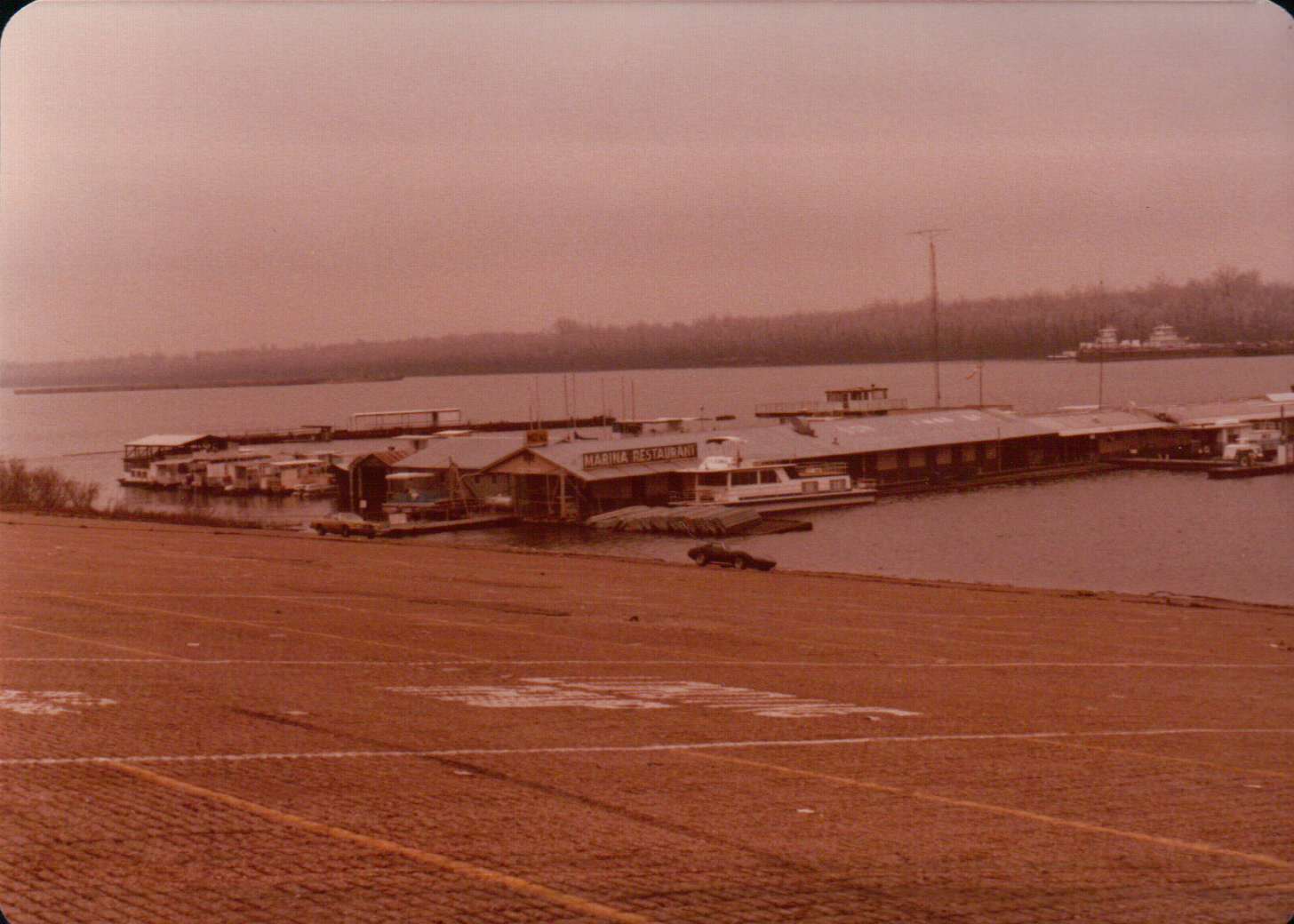
Like many people who grew up in the Mississippi Delta, I spent lots of time around the levee in my town, on the banks of the Mississippi River.  Unlike other people, though, what I did most there was run, up and down, rain or shine, cold or hot.

The Levee, where we did "Hill Workouts"
Dad was of the old-school way of thinking about running:  “No pain, no gain; no guts, no glory.”  That meant we ran, almost every day of the year, and the summer heat and humidity were not an excuse to forego that plan.  In fact, he loved to say, Almost anyone can be a runner on a perfect spring or fall day, but it takes a Real Runner to run in the extreme heat of summer and the extreme cold of winter.”  (He also told me once that Real Runners don't wear leggings or warm-up pants in races … and so I wore shorts in a marathon on a day in December when it was only 20 degrees outside.  I didn’t feel my legs for the first 18 miles of the race, but that’s a story for another time …)


With all that heat and all that running, I don’t remember complaining, though, because I loved to run.  And I loved growing up in the Delta, and, well, that meant running when it was almost literally hot as hell outside sometimes.  Every year, at the beginning of every summer when it started to get really hot, Dad said, “You can get used to almost anything if you do it everyday for two weeks.”  And for the most part, he was right. 

Another thing I remember Dad saying as we ran up and down the levee is this:  “In running, when you have a good day, take a picture of it in your head, so that you can think about it again the next time your day isn’t going so great.”

So that’s what I did.  With lots of pictures in my head, those runs in the extreme heat of summer didn’t seem so bad.  And he was right:  I did get used to them after awhile, and they did make me stronger as a runner and maybe even as a person.

Even better than pictures in my head from while I was running, though, are the pictures in my head and the photographs from the times over the years that my family was together.  Looking back through hundreds of photos, I remember the day and in some cases the exact moment when many of them were taken.  In some, we are posed, and others are informal.  I think the best ones, though, are those when the victims subjects were caught in action.

About a week after my dad was diagnosed with brain cancer, I made an appointment for a photo session for our extended family.  We had gotten a family photo taken around Thanksgiving the year before, and I was thinking that we should try to do it around that same time every year.  I told Dad when I had booked the session, thinking he would like the idea, but he didn’t really react much to it.  Having that session on the calendar gave the rest of us something to look forward to and, I’m sure somewhere WAY in the back of our minds, a sense of relative security because we were suddenly acutely aware that our time together could be limited.   Looking back, I can see that having those family photos taken in the midst of all the chaos and stress going on as we tried to cope with the intensity of Dad's illness and with the downhill of the roller-coaster ride of Grandmom's condition was all part of an effort, at least on my part, to fix time, to keep things from progressing, to capture our family's memories and love in a tangible way, in hopes that that would allow us some control over what was going on.  As is, or actually, as was, is the way I desperately wanted things to be, and I was willing to put forth my best effort to make that happen.  And what an effort it was. 

We had all planned to gather at our parents’ house the weekend after Thanksgiving.  Dad, Mom, one of my sisters, and I had gotten back from our trip to the Brain Tumor Clinic at Duke University late in the evening on Thanksgiving Day, and we were exhausted.  We were motivated, though, to have the intactness of our family captured on film.  

The Day of the Family Photos began with an early morning phone call from the nursing home where my grandmother lived, about five miles from my parents’ house.  One of my sisters answered the phone, and the nurse told her that Grandmom had taken a turn for the worse. 

As was the pattern for Dad at the time, he hadn’t been able to sleep at all that night and had just gotten to sleep about 5 a.m.  He’d had a headache and, after just having gotten his first dose of chemo two days before, we felt that he needed to be closely monitored and that he needed his sleep whenever he could get it.  One of my sisters, her husband, and my mom had been up with him in the night, too, and so my brother, my other sister, and I quickly got dressed and raced to the nursing home to be with Grandmom.

She had the Death Rattle going and was unresponsive.  Even though she was being cared for in a nursing home, she was also on Hospice, and the Hospice nurse was there with her.  “Just sit with her and talk to her,” she advised us in the hallway outside of Grandmom’s room. “She hasn’t been able to eat or drink in a couple of days, and she has a high fever that isn’t responding to medication.  We are giving her medicine to keep her comfortable.”

I had been in the shower when the phone call had come, and I still had wet hair despite the freezing cold temperature outside.  My sister hadn’t slept well and had a bad headache.  After we had been there for awhile, our brother said he would go to get some medicine to help with the headache and then would be back. 

He ended up being gone for longer than expected though, because he had a fender-bender in his rental car on the way to get the medicine.  (When it rains, it pours, right?)  My sister and I sat with Grandmom, with each of us holding one of her hands.  There were photos of family members and of her at different times in her life on the walls of her room, and we talked to her about each of them, hoping she could hear us and that she had taken a picture of those memories in her head so that she could be thinking about all of those good times again. 

The Hospice nurse eventually told us that she thought that Grandmom had a few days left and recommended that we hire an aide to sit with her during the time that we couldn’t be there.   We hastily made the arrangements and then got ready for the photo session in about 20 minutes, planning to have the pictures taken and then hurry back to the nursing home.

The rest of the family had been getting ready and helping to get Dad ready, and we met the photographer in the common area of my parents’ neighborhood.  It was very cold and windy outside, and Dad, who had lost almost all of his body fat over the past few weeks, was exceptionally miserable.  It felt like we were climbing a mountain, but, even as stressed and fatigued as were were, we were well aware that we needed to do whatever we could to recognize, appreciate, and remember the view from where we stood that day.  We all smiled for the camera, knowing that we’d be glad that we’d had a picture taken so that we could be thinking about the memories later, especially if things weren’t going so great.